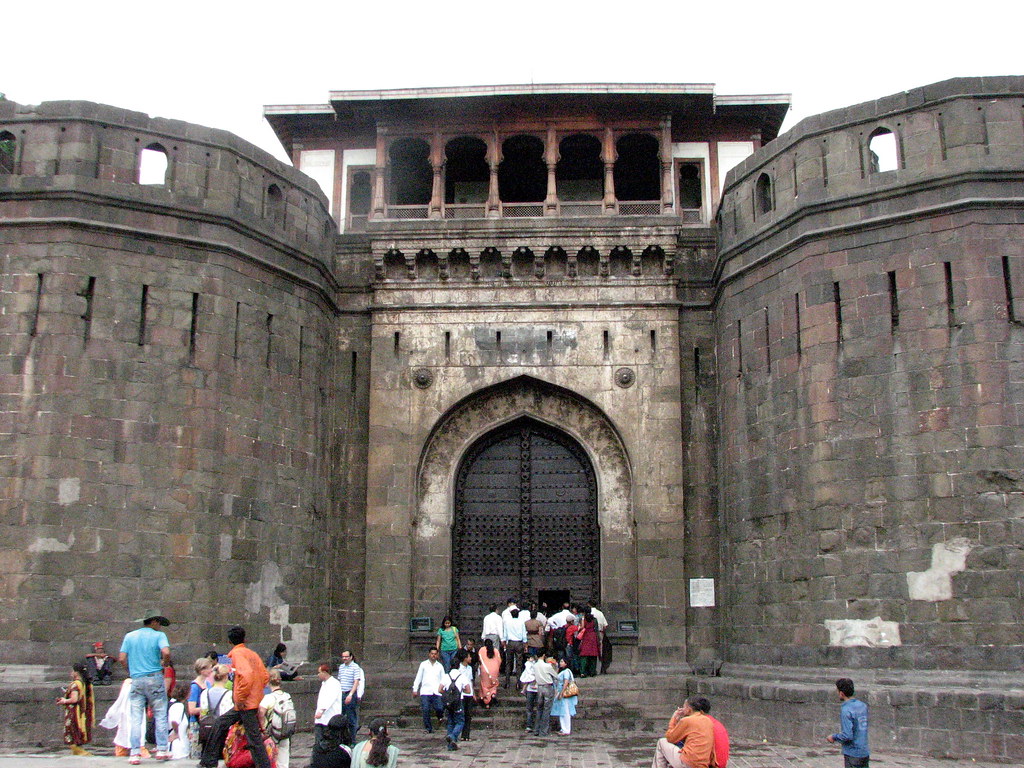
Standing as a timeless guardian of Pune’s storied past, Shaniwar Wada rises in the heart of the city as a majestic testament to Maratha valor and architectural grandeur. Located at an altitude of 550 meters in Maharashtra’s cultural hub, this 18th-century fortress, built in 1732 by Peshwa Bajirao I, is renowned for its imposing gates, intricate woodwork, and historical significance. A heritage icon akin to the natural allure of Lonavala, Shaniwar Wada captivates with its tales of Maratha power, lush gardens, and evening light shows. For visitors to indiatourisminfo.com, Shaniwar Wada offers an immersive journey, whether you’re exploring its historic courtyards, admiring Peshwa-era architecture, or soaking in Pune’s vibrant culture. This fortress, blending Maratha legacy with Maharashtra’s dynamic spirit, is an unmissable destination in West India for history enthusiasts, culture lovers, and travelers seeking Pune’s rich heritage.
Key Attractions
Delhi Gate: The grand main entrance, showcasing Maratha architectural prowess with intricate designs.
Ganesh Mahal: A historic hall once used for royal gatherings, adorned with Peshwa-era aesthetics.
Fountain Courtyard: A serene courtyard with the iconic Hazari Karanje fountain, a visitor favorite.
Mastani Mahal (replica): A recreated section reflecting the romance of Bajirao and Mastani.
Fort Walls and Bastions: Imposing stone structures offering panoramic views of Pune.
Nagarkhana: A music gallery with historical significance, used for ceremonial announcements.
Light and Sound Show: An evening spectacle narrating the fort’s Maratha history.
Things to Do
Explore Delhi Gate: Admire the massive entrance and its intricate carvings.
Visit Ganesh Mahal: Wander through historic halls and imagine Peshwa-era grandeur.
Relax in Fountain Courtyard: Enjoy the serene ambiance near the Hazari Karanje fountain.
Tour Mastani Mahal: Learn about the legendary love story of Bajirao and Mastani.
Attend Light and Sound Show: Experience the fort’s history through an evening multimedia display (check 2025 schedules).
Photography: Capture the fort’s gates, courtyards, or light show against Pune’s skyline.
Join Ganesh Chaturthi Celebrations: Participate in nearby festivities with processions and sweets (August–September 2025, dates TBD).
Savor Marathi Cuisine: Relish misal pav, vada pav, or pithla bhakri at nearby eateries like Vaishali.
Local Culture and History
Constructed in 1732 by Peshwa Bajirao I, Shaniwar Wada served as the seat of the Peshwa rulers of the Maratha Empire until 1818, when it was partially destroyed by fire under British rule. Its robust architecture, with teak woodwork and stone fortifications, reflects Maratha engineering. Pune’s vibrant culture thrives around the fort, with Marathi traditions like Lavani dance, Tamasha theatre, and cuisine including puran poli, sabudana khichdi, and modak. Local markets sell Kolhapuri chappals, Paithani sarees, and Warli art, echoing Surajkund’s artisanal vibe. Festivals like Ganesh Chaturthi and Diwali bring lively celebrations, with pandals and street food stalls, akin to Gateway of India’s festive allure. Shaniwar Wada’s blend of Maratha history and Pune’s cultural dynamism offers visitors a rich cultural immersion.
Best Time to Visit
Shaniwar Wada is a year-round destination, with October to March (autumn and winter, 12–30°C) ideal for exploring the fort, nearby attractions, and enjoying pleasant weather. August–September is vibrant with Ganesh Chaturthi (2025 dates TBD), drawing crowds for festivities near Shaniwar Peth. April to June (spring and summer, 25–38°C) suits early morning (8–11 AM) or late afternoon visits (post-4 PM) to avoid heat; indoor areas like Ganesh Mahal provide relief. The monsoon (July–September) brings lush greenery but wet courtyards; carry umbrellas and sturdy shoes. Evenings are ideal for the light and sound show, while mornings offer fewer crowds. Book accommodations early for festival or peak seasons (October–March) to secure spots in Pune’s Shaniwar Peth or Deccan areas.
How to Reach
By Air: The nearest airport is Pune International Airport (Lohegaon, 10 km away, ~30-minute drive), with flights from Mumbai, Delhi, and Bengaluru. Taxis from the airport cost ~₹300–600.
By Train: The nearest railway station is Pune Junction (3 km, ~10-minute drive), with trains from Mumbai, Delhi, and Chennai. Taxis or auto-rickshaws from the station cost ~₹50–150. Shivajinagar Station (2 km, ~10 minutes) is another option.
By Road: Pune is accessible via NH48 from Mumbai (150 km, 3 hours) or Lonavala (65 km, 1.5 hours). MSRTC buses, private taxis (~₹300–600 from Pune city center), or shared cabs (~₹50–100) reach Shaniwar Wada. Self-driven cars have parking near the fort.
Local Transport: From Pune’s city center, hire taxis (~₹100–200) or auto-rickshaws (~₹50–100); PMPML buses (~₹10–30) or metro (Purple Line to Shivajinagar, 2 km away) connect to the fort.
Travel Tips
Booking: Purchase entry tickets at the gate; book accommodations for festivals like Ganesh Chaturthi in advance; check light and sound show schedules.
Cost: Shaniwar Wada entry ~₹25 for Indians, ₹300 for foreigners; light and sound show ~₹50–100 (as of 2023; verify 2025 rates).
Dress: Wear comfortable clothing and shoes for walking; carry hats or umbrellas for sun or rain; modest attire for nearby temples.
Safety: Secure valuables in crowded areas; follow fort guidelines; avoid touching historic structures; be cautious on uneven floors.
Respect Local Culture: Maintain silence during the light show; seek permission for photography in restricted areas; respect festival traditions.
Connectivity: Mobile networks are reliable in Pune; Wi-Fi is available at nearby cafes; carry cash for small vendors and autos.
Environment: Avoid littering to preserve the heritage site; use designated bins; support eco-friendly initiatives.
Accessibility: The fort’s main areas are accessible; some courtyards have steps; inform staff for assistance.
Nearby Attractions
Aga Khan Palace (7 km): A historic site with Gandhi memorials and serene gardens.
Pataleshwar Cave Temple (2 km): An 8th-century rock-cut temple dedicated to Lord Shiva.
Raja Dinkar Kelkar Museum (1 km): A museum showcasing Indian artifacts and crafts.
Sinhagad Fort (30 km): A historic hill fort with trekking trails and panoramic views.
Lonavala (65 km): A scenic hill station with waterfalls and forts.
Explore More
Discover other Maharashtra treasures like the serene Lonavala or historic Aga Khan Palace on our Maharashtra destinations page. Plan your historical and cultural journey with indiatourisminfo.com today!