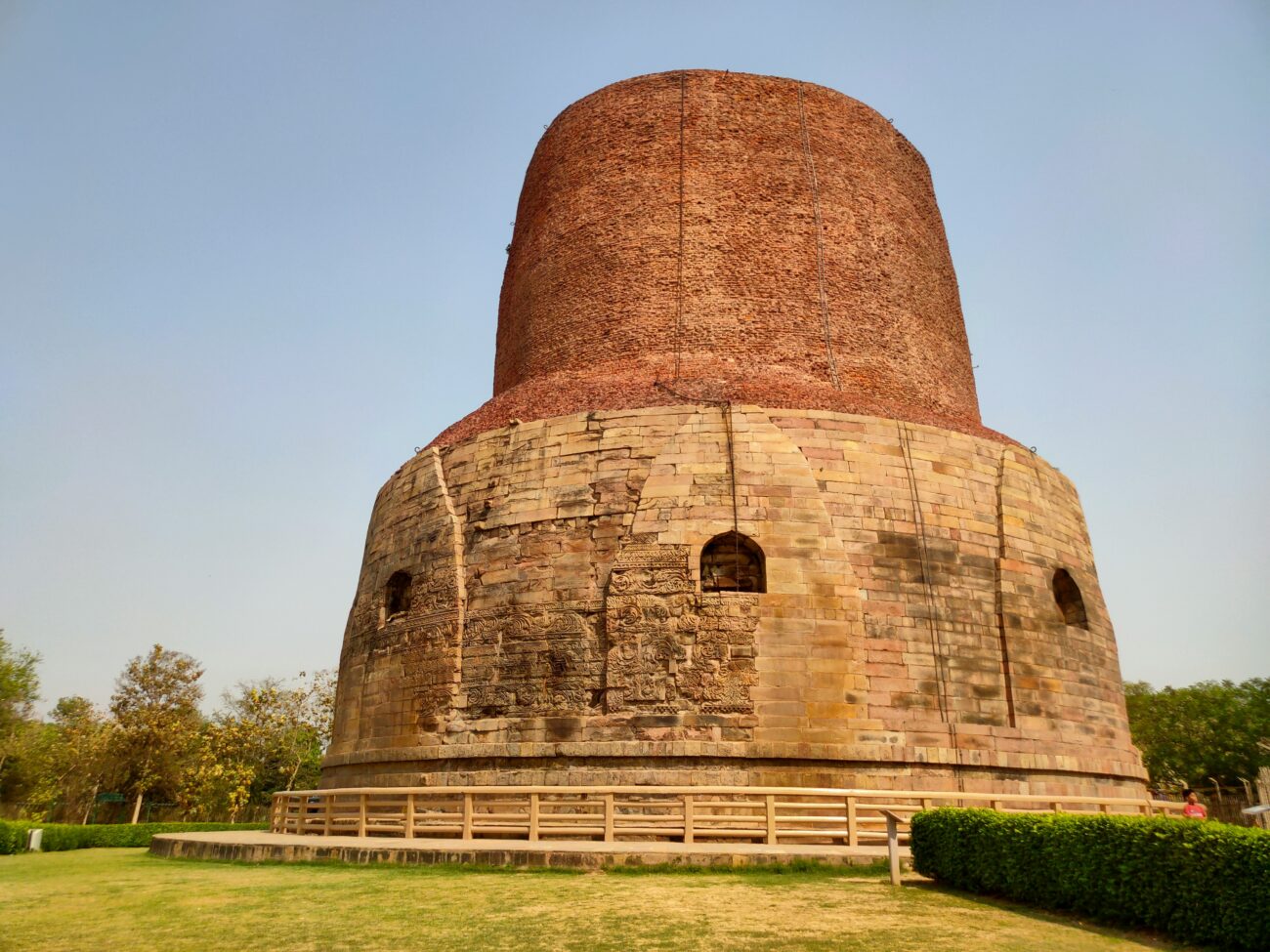
Nestled along the sacred banks of the Ganges like a beacon of spiritual enlightenment, Sarnath stands as Uttar Pradesh’s revered pilgrimage site, where Lord Buddha delivered his first sermon in the 6th century BCE. Located at an altitude of 80 meters near Varanasi, this ancient town is renowned for its Buddhist stupas, monasteries, and museums preserving relics of India’s spiritual heritage. A sacred haven akin to the cultural elegance of Lucknow, Sarnath captivates with its serene ambiance and historical depth. For visitors to indiatourisminfo.com, Sarnath offers an immersive journey, whether you’re meditating at ancient sites, exploring archaeological treasures, or soaking in Buddhist teachings. This spiritual hub, blending antiquity with Uttar Pradesh’s vibrant culture, is an unmissable destination in North India for spiritual seekers, history enthusiasts, and travelers seeking peace and wisdom.
Key Attractions
Dhamek Stupa: A 6th-century BCE stupa marking the spot of Buddha’s first sermon, adorned with intricate carvings.
Chaukhandi Stupa: A historic stupa, later modified by Mughals, symbolizing Buddhist heritage.
Sarnath Archaeological Museum: A repository of Buddhist artifacts, including the Ashokan Lion Capital.
Mulagandha Kuti Vihar: A modern monastery with vibrant frescoes depicting Buddha’s life.
Ashoka Pillar: A 3rd-century BCE pillar with the iconic Lion Capital, India’s national emblem.
Thai Temple: A serene Buddhist temple with lush gardens and intricate architecture.
Deer Park: The sacred site where Buddha preached, now a tranquil park for reflection.
Things to Do
Visit Dhamek Stupa: Admire its carvings and meditate at this sacred Buddhist site.
Explore Chaukhandi Stupa: Learn about its Buddhist and Mughal architectural blend.
Tour Sarnath Archaeological Museum: View the Ashokan Lion Capital and ancient relics.
Pray at Mulagandha Kuti Vihar: Join chants and admire frescoes of Buddha’s life.
Reflect at Deer Park: Meditate or stroll in the serene park where Buddhism began.
Photography: Capture stupas, monasteries, or serene landscapes at sunrise or sunset.
Attend Buddha Purnima: Join vibrant celebrations with processions and prayers (April–May 2025, dates TBD).
Savor Local Cuisine: Relish kachori, banarasi paan, or malaiyo at nearby Varanasi eateries.
Local Culture and History
Sarnath, one of Buddhism’s four holiest sites, gained prominence in the 6th century BCE when Gautama Buddha delivered his first sermon, the Dharma Chakra Pravartan, in Deer Park. Revived by Emperor Ashoka in the 3rd century BCE, it became a center of Buddhist learning, with stupas and monasteries flourishing under the Mauryan, Gupta, and Pala dynasties. The region’s culture blends Buddhist serenity with Uttar Pradesh’s vibrant traditions, including Banarasi music, classical dance, and cuisine like dum aloo and chhena sweets. Local markets sell Banarasi sarees and Buddhist souvenirs, echoing Surajkund’s artisanal vibe. Festivals like Buddha Purnima and Diwali bring vibrant celebrations, with illuminated stupas and processions, akin to Lucknow’s Nawabi allure. Sarnath’s blend of spiritual legacy and cultural richness offers a profound experience.
Best Time to Visit
Sarnath is a year-round destination, with October to March (autumn and winter, 10–28°C) ideal for exploring stupas, monasteries, and museums, thanks to pleasant weather. April–May is vibrant with Buddha Purnima (2025 dates TBD), drawing pilgrims for spiritual events. April to June (summer, 25–40°C) suits early morning (7–10 AM) or evening visits (post-4 PM) to avoid heat; shaded sites like Mulagandha Kuti provide relief. The monsoon (July–September) brings humidity and occasional rain; carry umbrellas for outdoor exploration. Early mornings offer serene visits to stupas, while evenings suit museum tours. Book accommodations early for festival or peak seasons (October–March) to secure spots in Sarnath or Varanasi.
How to Reach
By Air: The nearest airport is Lal Bahadur Shastri International Airport (Varanasi, 25 km away, ~45-minute drive), with flights from Delhi, Mumbai, and Kolkata. Taxis from the airport cost ~₹500–1000.
By Train: The nearest railway station is Varanasi Junction (10 km, ~20-minute drive), with trains from Delhi, Kolkata, and Lucknow. Taxis or auto-rickshaws from the station cost ~₹100–200. Sarnath Station (1 km, ~5 minutes) is another option for local trains.
By Road: Sarnath is accessible via NH19 from Lucknow (300 km, 6 hours) or Allahabad (125 km, 3 hours). UPSRTC buses, private taxis (~₹300–600 from Varanasi), or shared cabs (~₹50–100) reach Sarnath. Self-driven cars have parking near major sites.
Local Transport: From Varanasi, hire taxis (~₹200–400) or auto-rickshaws (~₹50–150); cycle rickshaws (~₹30–100) or local buses (~₹10–30) connect to attractions.
Travel Tips
Booking: Purchase entry tickets at monument counters; book accommodations for festivals like Buddha Purnima in advance.
Cost: Dhamek Stupa entry free; Archaeological Museum ~₹5 for Indians, ₹100 for foreigners; Mulagandha Kuti free (as of 2023; verify 2025 rates).
Dress: Wear comfortable clothing and shoes for walking; carry hats or umbrellas for sun or rain; modest attire for religious sites.
Safety: Secure valuables in crowded areas; follow monument guidelines; avoid touching artifacts; be cautious near busy roads.
Respect Local Culture: Maintain silence in monasteries; seek permission for photography during rituals; respect Buddhist traditions.
Connectivity: Mobile networks are reliable; Wi-Fi is available at hotels in Varanasi; carry cash for small vendors and rickshaws.
Environment: Avoid littering to preserve heritage sites; use designated bins; support eco-friendly vendors.
Accessibility: Main attractions like Dhamek Stupa are accessible; some ruins have uneven paths; inform staff for assistance.
Nearby Attractions
Varanasi Ghats (10 km): Iconic riverfronts like Dashashwamedh Ghat for Ganga Aarti and rituals.
Kashi Vishwanath Temple (12 km): A revered Shiva temple in Varanasi’s spiritual heart.
Banaras Hindu University (15 km): A historic campus with Bharat Kala Bhavan museum.
Ramnagar Fort (14 km): A 17th-century fort with Mughal architecture and a museum.
Lucknow (300 km): Uttar Pradesh’s cultural capital with Bara Imambara and Nawabi heritage.
Explore More
Discover other Uttar Pradesh treasures like the vibrant Lucknow or spiritual Varanasi on our Uttar Pradesh destinations page. Plan your spiritual and cultural journey with indiatourisminfo.com today!