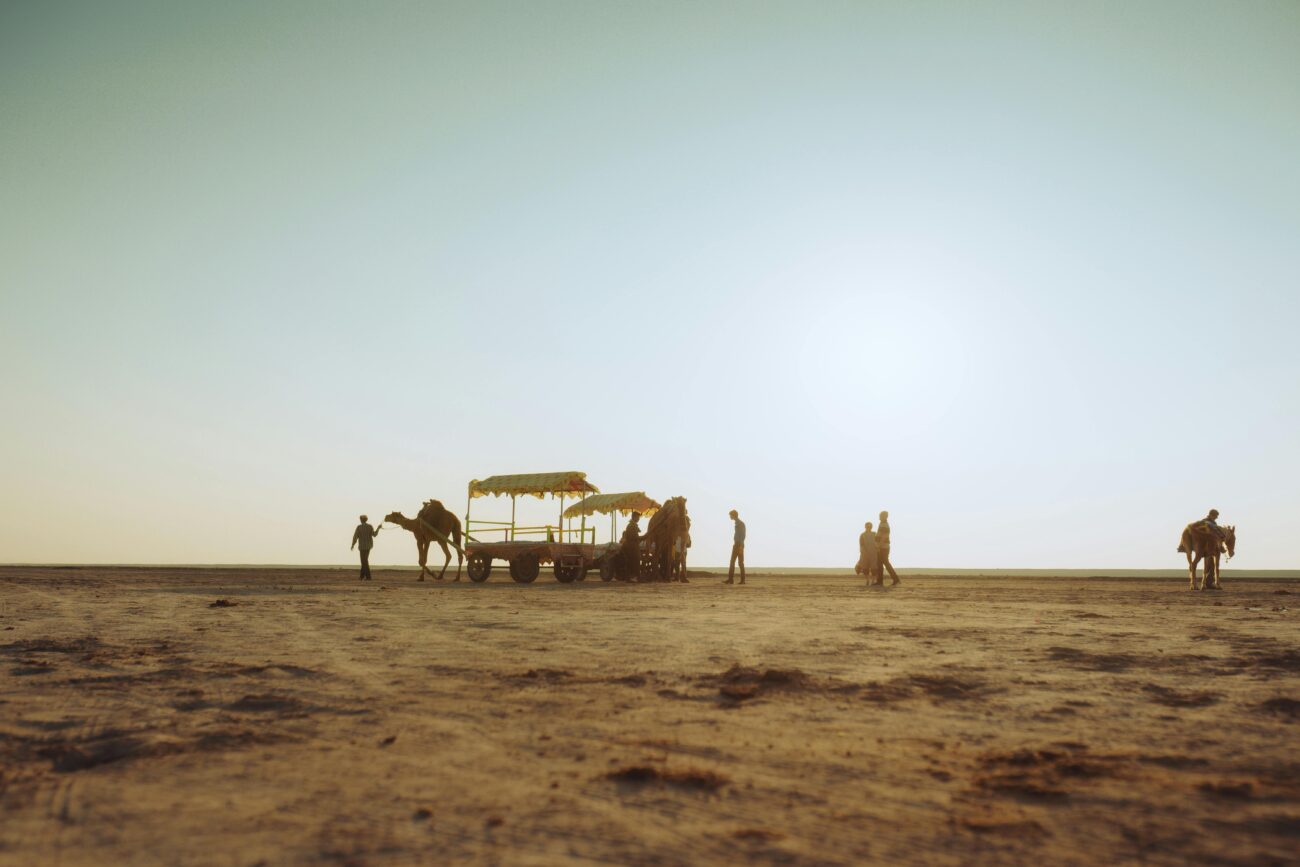
Stretching like a blinding white canvas under the relentless Gujarat sun, the Rann of Kutch unfurls as one of the world’s largest salt deserts, a 7,500-sq-km seasonal marshland that transforms into a lunar landscape during the dry season, dotted with flamingos and Kutchi crafts. Located at sea level in the Kutch district, this ancient seabed—formed 2 million years ago—blends arid desolation with vibrant culture. A surreal wonder akin to the wilds of Gir National Park, Rann enchants with its Rann Utsav festival and camel caravans. For visitors to indiatourisminfo.com, Rann of Kutch offers a mesmerizing odyssey, from full-moon walks to embroidery workshops. With 2025 eco-camps and the UNESCO Tentative List status, this “White Rann” is an unmissable destination for photographers, festival-goers, and travelers seeking Gujarat’s stark, sparkling soul.
Key Attractions
White Rann: The vast salt flat, a mirror of the sky during full moon.
Rann Utsav Ground: The festival hub with tents, cultural stages, and Kutchi cuisine.
Dhordo Village: Traditional Kutchi mud huts and embroidery boutiques.
Kutch Museum: Asia’s oldest museum with fossils and tribal artifacts.
Banni Grasslands: 2,497 sq km wetland for flamingos and wild ass.
Great Rann of Kutch: The larger northern section with lunar craters.
Salt Desert Treks: Camel safaris across the cracked salt crust.
Things to Do
Full Moon Walk: Stroll the white salt flats under lunar light (November–February, ~₹500–1000).
Camel Safari at Dawn: Ride across the Rann with Kutchi guides (~₹800–1500).
Attend Rann Utsav: Enjoy music, dance, and handicrafts (November 1, 2025–February 28, 2026).
Photography in Salt Mirror: Capture reflections and mirages at sunset.
Shop Kutchi Embroidery: Buy bandhani and suf at Dhordo tents.
Birdwatching in Banni: Spot 250+ species like sarus cranes (October–March).
Taste Kutchi Cuisine: Savor dabeli, dhokla, or bamboo shoot curry at festival stalls.
Visit Kutch Museum: Explore 19th-century fossils and textiles (~₹20 entry).
Local Culture and History
The Rann of Kutch, a remnant of the Tethys Ocean, was a trade hub under the Indus Valley Civilization (2600 BCE), with Kutchis—descendants of Jats and Rabaris—adapting to its harshness through nomadic pastoralism. Kutchi culture thrives with Rabari embroidery, dhabla weaving, and festivals like Rann Utsav, featuring garba and dandiya. The 2025 eco-camps, noted by Gujarat Tourism and X posts, include solar-powered tents and zero-waste policies. Rann’s blend of resilience, craft, and desolation crafts a unique cultural narrative.
Best Time to Visit
Rann is open year-round, with November to February (winter, 5–25°C) ideal for Rann Utsav (November 1, 2025–February 28, 2026) and full moon walks. October to March offers clear skies. April to June (summer, 30–45°C) suits early mornings. July to September (monsoon, 25–35°C, 500 mm rainfall) floods the Rann; avoid. Book tents 3–6 months ahead for Utsav.
How to Reach
By Air: Bhuj Airport (80 km, ~2-hour drive). Taxis ~₹2000–3500.
By Train: Bhuj Railway Station (80 km, ~2-hour drive). Taxis ~₹1500–2500.
By Road: From Bhuj (80 km, 2 hours) or Ahmedabad (400 km, 7 hours). GSRTC buses (~₹100–300), taxis (~₹2000–3500). Entry at Dhordo gate (~₹50/vehicle).
Local Transport: Taxis (~₹1000–2000), shared jeeps (~₹100–300), or cycle rickshaws (~₹50–100); camel carts (~₹200–500).
Travel Tips
Booking: Rann Utsav tents ~₹5000–15000/night; book via rannutsav.com (6 months ahead).
Cost: Food ~₹100–300; taxi from Bhuj ~₹2000–3500; homestays ~₹2000–5000/night.
Dress: Light cotton; hats/sunglasses; sturdy shoes for salt flats; jackets for winter nights.
Safety: Watch for mirages; secure valuables; no vehicles on Rann; follow guides.
Respect Local Culture: Support Kutchi artisans; no plastic; dress modestly near villages.
Connectivity: Mobile patchy; Wi-Fi at tents; carry cash.
Environment: Salt flats fragile; no littering; use bins.
Accessibility: Flat terrain; wheelchairs challenging on sand; inform camps.
Nearby Attractions
Dhordo Village (5 km): Kutchi embroidery and mud huts.
Kutch Museum (80 km): Fossils and tribal artifacts.
Dholavira (200 km): Harappan site.
Wild Ass Sanctuary (150 km): Asiatic wild asses.
Mandvi Beach (100 km): Vijay Vilas Palace and beaches.
Explore More
Discover other Gujarat treasures like the majestic Gir National Park or sacred Somnath Temple on our Gujarat destinations page. Plan your salt desert journey with indiatourisminfo.com today!