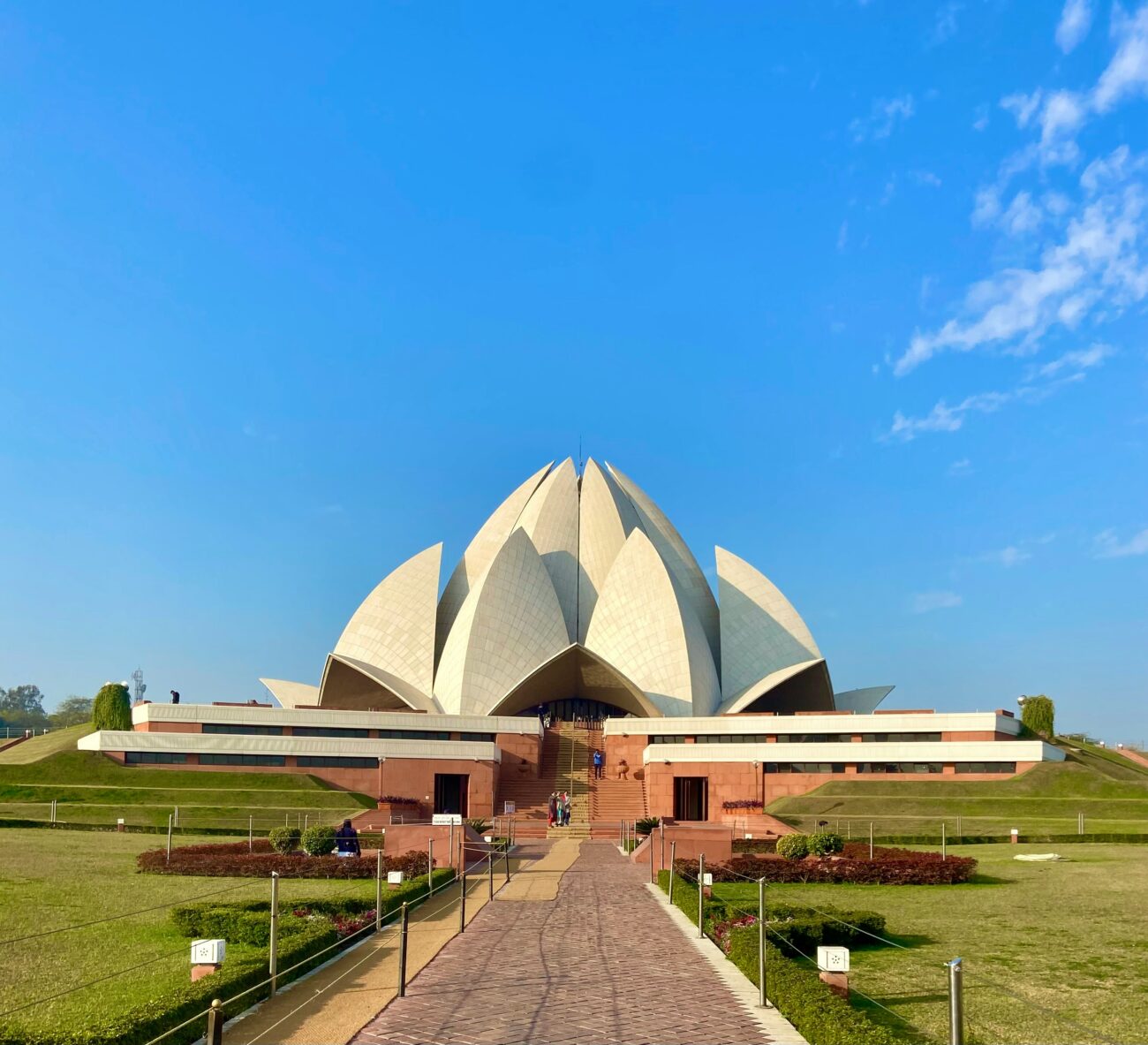
Blooming like a radiant lotus in the bustling heart of Delhi, the Lotus Temple stands as a serene sanctuary of spirituality and architectural brilliance. Located in South Delhi’s Kalkaji at an altitude of 110 meters, this Bahá’í House of Worship, completed in 1986, is famed for its 27 petal-like marble structures, symbolizing unity and peace. Designed by Fariborz Sahba, it welcomes people of all faiths, offering a tranquil retreat akin to the patriotic fervor of India Gate. Its award-winning design and lush gardens draw millions, making it one of Delhi’s most visited sites. For visitors to indiatourisminfo.com, the Lotus Temple offers a soulful experience, whether you’re meditating in its silent hall, admiring its architecture, or strolling its serene grounds. This iconic monument, blending modern design with universal spirituality, is an unmissable destination in North India for those seeking peace and cultural enrichment.
Key Attractions
Lotus Temple Structure: The iconic 27 white marble petals arranged in a lotus shape, a marvel of modern architecture.
Prayer Hall: A serene, silent interior space open to all faiths for meditation and reflection.
Gardens and Ponds: Nine lush gardens and reflective pools surrounding the temple, enhancing its tranquil ambiance.
Information Centre: An educational hub with exhibits on Bahá’í faith, architecture, and the temple’s construction.
Library: A small facility within the complex offering Bahá’í literature and spiritual texts.
Amphitheatre: An outdoor space for occasional cultural events and gatherings, set amidst the gardens.
Solar Panels: Eco-friendly panels powering the temple, showcasing its commitment to sustainability.
Things to Do
Meditate in Prayer Hall: Spend time in silent reflection or prayer, embracing the temple’s universal spiritual ethos.
Admire the Architecture: Marvel at the lotus-shaped design and intricate marble work, especially from the gardens.
Stroll the Gardens: Walk through nine landscaped gardens and reflective pools, soaking in the peaceful ambiance.
Visit Information Centre: Learn about the Bahá’í faith, the temple’s design, and its global significance through exhibits.
Photography: Capture the temple’s petals and gardens, particularly at sunrise or when illuminated at dusk.
Attend Cultural Events: Participate in occasional music or interfaith gatherings at the amphitheatre (check schedules for 2025).
Explore the Library: Browse Bahá’í texts for insights into the faith’s principles of unity and equality.
Relax by Ponds: Sit by the reflective pools, enjoying the serene views and calming environment.
Local Culture and History
The Lotus Temple, completed in 1986, is one of seven Bahá’í Houses of Worship worldwide, built to promote unity across religions, a core tenet of the Bahá’í faith founded by Bahá’u’lláh in the 19th century. Designed by Iranian-Canadian architect Fariborz Sahba, its lotus shape symbolizes purity in Indian culture, earning accolades like the GlobArt Award. The temple’s construction involved 800 workers and 10,000 marble pieces from Greece, reflecting global collaboration. Delhi’s cosmopolitan culture thrives around Kalkaji, with nearby markets offering dosa, momos, and kulfi. Locals celebrate festivals like Diwali and Eid, and artisans sell handicrafts and jewelry, echoing Surajkund’s craft heritage. The temple hosts interfaith events, fostering Delhi’s spirit of inclusivity, akin to the historical narratives of Qutub Minar. Its universal appeal draws diverse visitors, offering a blend of modern spirituality and Delhi’s vibrant urban culture.
Best Time to Visit
The Lotus Temple is a year-round destination, with October to March (autumn and winter, 5–25°C) ideal for exploring the gardens and prayer hall, thanks to cool weather and clear skies. April to June (spring and summer, 20–45°C) is suitable for early morning (9 AM) or evening visits (post-4 PM) to avoid heat; the prayer hall is air-conditioned. The monsoon (July–September) brings rain, making gardens lush but paths slippery; carry umbrellas. Early mornings offer fewer crowds and soft light for photography, while evenings (5–7 PM) are magical with illuminated petals. The temple is closed on Mondays. Book accommodations early for peak seasons (October–March) or festivals like Diwali to secure spots in South Delhi.
How to Reach
By Air: The nearest airport is Indira Gandhi International Airport (Delhi, 15 km away, ~30-minute drive), with flights from Mumbai, Bengaluru, and international hubs. Taxis from the airport cost ~₹500–1000.
By Train: The nearest railway station is New Delhi Railway Station (12 km, ~25-minute drive), with trains from Mumbai, Kolkata, and Amritsar. Taxis or auto-rickshaws from the station cost ~₹100–250.
By Road: Lotus Temple is accessible via NH48 from Gurugram (20 km, 40 minutes) or Noida (15 km, 30 minutes). DTC buses, private taxis (~₹400–800 from Delhi areas), or shared cabs (~₹100–200) are available. Self-driven cars have parking facilities nearby.
Local Transport: The nearest metro is Kalkaji Mandir (Magenta/Violet Line, 1 km, ~5-minute walk). Auto-rickshaws (~₹50–100) or cycle rickshaws (~₹20–50) connect the metro to the temple.
Travel Tips
Booking: No entry tickets are required; book accommodations in South Delhi for peak seasons (October–March); check event schedules for 2025.
Cost: Entry to Lotus Temple and gardens is free; donations are voluntary (as of 2023; verify current policies).
Dress: Wear modest clothing covering shoulders and knees; remove shoes before entering the prayer hall (free storage provided).
Safety: Secure valuables in crowded areas; follow temple guidelines; avoid photography inside the prayer hall.
Respect Local Culture: Maintain silence in the prayer hall; seek permission before photographing events; respect the temple’s interfaith ethos.
Connectivity: Mobile networks are reliable; Wi-Fi is unavailable at the temple; carry cash for nearby vendors and rickshaws.
Environment: Avoid littering to preserve the gardens; use designated bins.
Accessibility: The temple and gardens have ramps for wheelchair access; inform staff for assistance in crowded areas.
Nearby Attractions
Qutub Minar (10 km): A UNESCO World Heritage Site, a 12th-century minaret with intricate carvings.
India Gate (7 km): A majestic war memorial with sprawling lawns and Amar Jawan Jyoti.
Red Fort (15 km): A UNESCO-listed Mughal fortress in Old Delhi, famous for its history.
Humayun’s Tomb (8 km): A UNESCO-listed Mughal tomb with stunning gardens and architecture.
Connaught Place (10 km): A colonial-era market with restaurants, shops, and vibrant nightlife.
Explore More
Discover other Delhi treasures like the historic Qutub Minar or patriotic India Gate on our Delhi destinations page. Plan your spiritual and cultural journey with indiatourisminfo.com today!