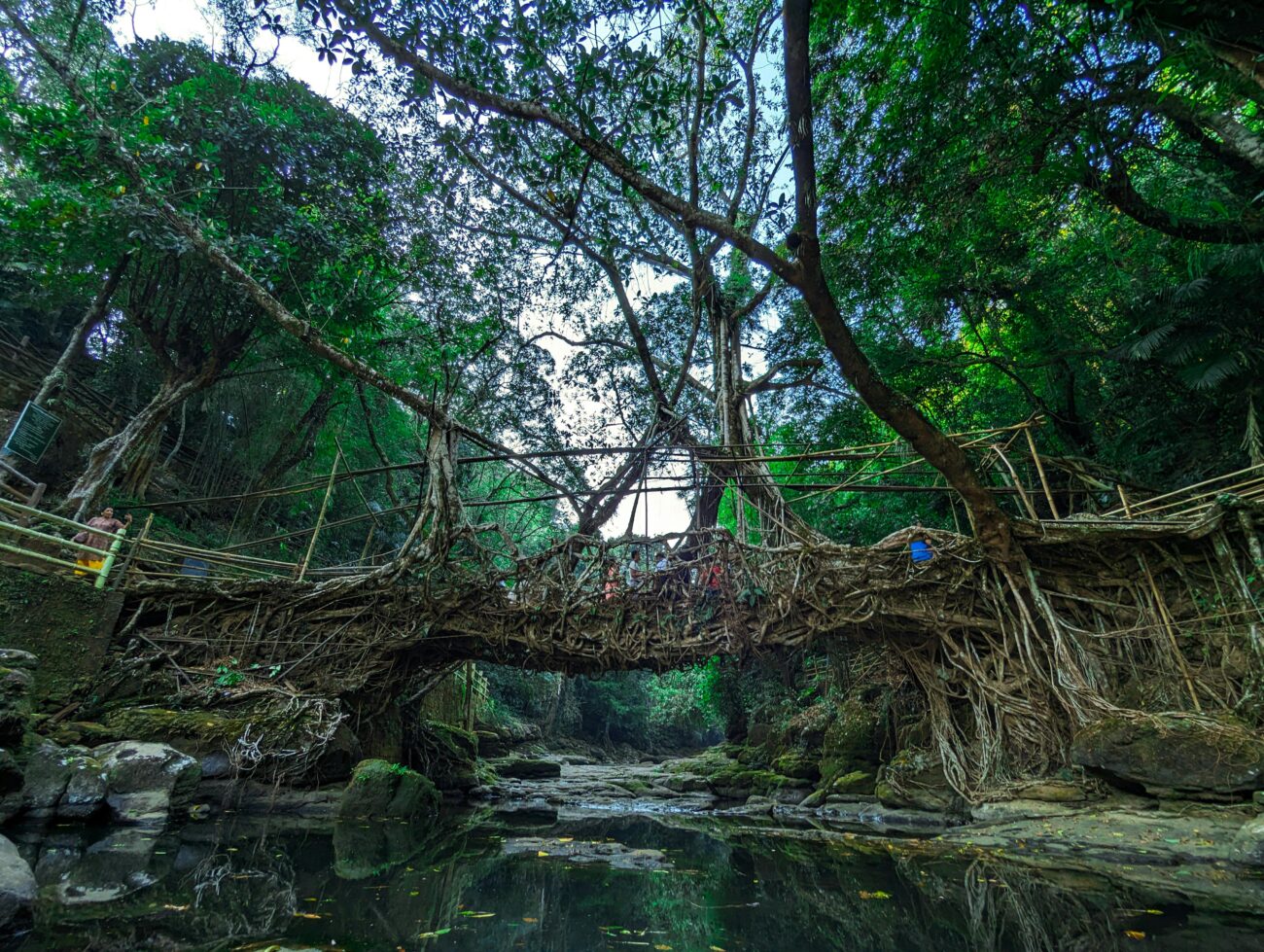
Deep inside the world’s wettest rainforests, where clouds kiss the earth 300 days a year, the Khasi tribes of Meghalaya have spent five centuries growing – not building – their bridges. Using only the aerial roots of ancient Ficus elastica (rubber fig) trees, they weave living architecture that becomes stronger with every monsoon. The star attraction is the 200-year-old Double-Decker Living Root Bridge at Nongriat – a 100-ft-long, two-tier masterpiece suspended 80 ft above a crystal-clear river. Located 50 km south of Shillong near Cherrapunji (Sohra), these bridges are UNESCO-recognised Intangible Cultural Heritage and one of the planet’s most astonishing examples of indigenous bio-engineering. A magical contrast to Umiam Lake’s serenity, the root bridges offer a challenging yet rewarding jungle trek through bamboo forests, waterfalls, and Khasi villages. For visitors to indiatourisminfo.com, this is Meghalaya’s ultimate bucket-list adventure. With 2025 eco-homestays and the Living Root Bridge Festival, these “Bridges Grown by Time” are an unmissable destination for trekkers, photographers, and nature lovers.
Key Attractions
Double-Decker Bridge (Nongriat) – the world-famous two-level bridge
Single Root Bridges (Ritymmen, Nongthymmai)
Rainbow Falls – turquoise pool below the Double-Decker
Nongriat Village – 3,000-step descent & Khasi homestays
Mawsawa Falls – hidden cascade en route
Jingmaham Living Root Bridge – lesser-known 250-year-old gem
Natural Swimming Pools – crystal-clear river dips
Things to Do
Trek the classic 3,000-step route to Nongriat (~3–4 hrs return)
Swim in Rainbow Falls pool beneath the Double-Decker
Overnight in a Khasi homestay with bamboo huts & local meals
Attend Living Root Bridge Festival – tribal music & bridge maintenance demo (Nov 14–16, 2025)
Photography at golden hour when mist lifts
Learn root-weaving from local guides
Try betel nut & kwai with Khasi families
Local Culture and History
The War Khasi and War Jaintia tribes have been training roots since the 1500s – guiding them across rivers using betel-nut trunks, then waiting 15–30 years for maturity. Some bridges are over 500 years old and can bear 50+ people. The 2025 “Adopt-a-Root” conservation programme, highlighted by Meghalaya Tourism and X posts, lets visitors sponsor new bridges.
Best Time to Visit
Open year-round, with November to February (dry season, 10–20°C) ideal for comfortable trekking and clear views. June to September (monsoon) makes rivers gush and bridges slippery – only for experienced trekkers. Avoid heavy rain days.
How to Reach
By Air: Shillong Airport (90 km) or Guwahati (150 km)
By Road: From Shillong → Tyrna village (50 km, 2 hrs) → start trek
Parking: Tyrna village (~₹100/day)
Local Transport: Shared sumo from Shillong (~₹150), then trek or porters (~₹500–800)
Travel Tips
Booking: Homestays via local guides or livingrootbridges.com
Cost: Guide+homestay ~₹1500–2500/person; food ~₹200–400
Dress: Good trekking shoes; rain jacket; change of clothes
Safety: Hire a local guide; avoid monsoon flash floods
Respect Local Culture: Ask before photographing people; no alcohol in villages
Connectivity: No signal in Nongriat – enjoy the digital detox
Environment: Carry out all trash; do not damage roots
Accessibility: 3,000+ steps – not suitable for elderly or very young kids
Nearby Attractions
Nohkalikai Falls (20 km) – India’s 4th highest plunge
Mawsmai Cave (15 km) – limestone wonder
Seven Sisters Falls (18 km) – monsoon spectacle
Mawlynnong (40 km) – Asia’s cleanest village
Dawki (70 km) – crystal-clear Umngot River
Explore More
Discover other Meghalaya miracles like serene Umiam Lake or sacred Mawphlang Grove on our Meghalaya destinations page. Plan your living bridge trek with indiatourisminfo.com today!