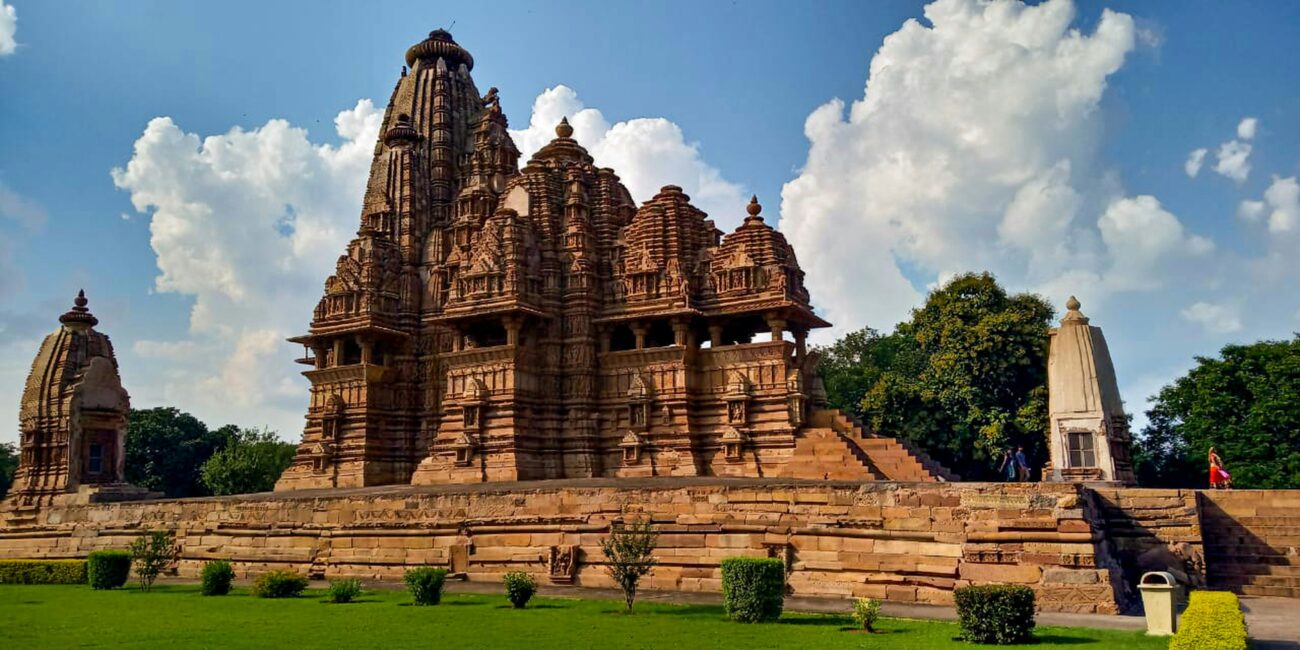
Rising from the heart of Madhya Pradesh like a symphony carved in stone, Khajuraho stands as a UNESCO World Heritage Site, celebrated for its exquisite 10th-century temples adorned with intricate carvings of gods, lovers, and mythical beings. Located at an altitude of 283 meters in the Chhatarpur district, this ancient town, built by the Chandela dynasty, captivates with its architectural grandeur and cultural legacy. A historical marvel akin to the natural wonder of Baratang’s Limestone Caves, Khajuraho enchants with its blend of spirituality and artistry. For visitors to indiatourisminfo.com, Khajuraho offers an immersive journey, whether you’re exploring its temple complexes, attending the famed dance festival, or soaking in Madhya Pradesh’s vibrant heritage. This iconic destination, harmonizing history with cultural splendor, is an unmissable gem for history buffs, art lovers, and travelers seeking India’s timeless beauty.
Key Attractions
Kandariya Mahadeva Temple: The largest and most ornate temple in the Western Group, known for its erotic and divine carvings.
Lakshmana Temple: A 10th-century Vaishnavite temple with detailed sculptures and a serene ambiance.
Chausath Yogini Temple: An ancient granite temple dedicated to 64 yoginis, one of India’s oldest yogini shrines.
Archaeological Museum: A repository of Khajuraho’s sculptures, artifacts, and Chandela-era relics.
Vishvanatha Temple: A Shiva temple with intricate carvings and a Nandi shrine in the Western Group.
Raneh Falls: A nearby natural wonder with a dramatic granite canyon and seasonal waterfalls.
Light and Sound Show: An evening spectacle narrating the history of the Chandela dynasty and Khajuraho’s temples.
Things to Do
Explore Western Group Temples: Wander through Kandariya Mahadeva and Lakshmana temples, admiring intricate carvings.
Visit Chausath Yogini Temple: Discover the ancient yogini shrine and its spiritual significance.
Tour Archaeological Museum: View Chandela-era sculptures and artifacts, including rare temple fragments.
Attend Light and Sound Show: Experience Khajuraho’s history through an evening multimedia presentation (check 2025 schedules).
Photograph Temple Carvings: Capture the detailed sculptures and temple architecture at sunrise or sunset.
Join Khajuraho Dance Festival: Enjoy classical dance performances like Kathak and Bharatanatyam (February 2025, dates TBD).
Visit Raneh Falls: Explore the scenic canyon and waterfalls, ideal for nature lovers (post-monsoon).
Savor Local Cuisine: Relish bhutte ka kees, poha, or kusli at local eateries like Raja Café.
Local Culture and History
Khajuraho, established by the Chandela dynasty between the 9th and 11th centuries, was a thriving cultural and religious center, with over 85 temples originally built, of which 25 remain today. Renowned for their Nagara-style architecture and intricate carvings depicting life, love, and spirituality, these temples reflect the Chandela’s artistic zenith. The region’s Bundelkhandi culture thrives with folk arts like Rai dance, Badhaiya music, and cuisine such as dal bafla and mawa bati, echoing Surajkund’s artisanal vibe. The annual Khajuraho Dance Festival (February) draws global artists, showcasing classical dances against the temple backdrop, akin to Lucknow’s cultural allure. Festivals like Diwali and Holi bring vibrant celebrations with temple rituals and local sweets. Khajuraho’s blend of historical grandeur and cultural richness offers a profound experience.
Best Time to Visit
Khajuraho is a year-round destination, with October to March (autumn and winter, 10–28°C) ideal for exploring temples, museums, and nearby falls, thanks to pleasant weather. The Khajuraho Dance Festival (February 2025, dates TBD) draws crowds for its cultural performances. April to June (summer, 25–42°C) suits early morning (7–10 AM) or evening visits (post-4 PM) to avoid heat; indoor museums provide relief. The monsoon (July–September) enhances Raneh Falls’ beauty but may make temple paths slippery; carry umbrellas and sturdy shoes. Mornings offer serene temple visits, while evenings are ideal for the light and sound show. Book accommodations early for festival or peak seasons (October–March) to secure spots in Khajuraho or Chhatarpur.
How to Reach
By Air: The nearest airport is Khajuraho Airport (5 km away, ~15-minute drive), with flights from Delhi, Varanasi, and Mumbai. Taxis from the airport cost ~₹200–500.
By Train: The nearest railway station is Khajuraho Railway Station (7 km, ~20-minute drive), with trains from Delhi, Varanasi, and Agra. Taxis or auto-rickshaws from the station cost ~₹100–300. Mahoba Station (65 km, ~1.5-hour drive) is another option for broader connectivity.
By Road: Khajuraho is accessible via NH39 from Jhansi (175 km, 4 hours) or Satna (120 km, 3 hours). MPRTC buses, private taxis (~₹2000–3500 from Satna), or shared cabs (~₹200–400) reach Khajuraho. Self-driven cars have parking near temple complexes.
Local Transport: From Khajuraho town, hire taxis (~₹100–300), auto-rickshaws (~₹50–150), or cycles (~₹50–100/day); local buses (~₹10–30) connect to major attractions.
Travel Tips
Booking: Purchase temple entry tickets at the Western Group counter; book light and sound show tickets in advance; reserve accommodations for the Khajuraho Dance Festival early.
Cost: Western Group entry ~₹40 for Indians, ₹600 for foreigners; light and sound show ~₹100–300; Raneh Falls ~₹20–100 (as of 2023; verify 2025 rates).
Dress: Wear comfortable clothing and sturdy shoes for walking; carry hats or umbrellas for sun or rain; modest attire for temples.
Safety: Secure valuables in crowded areas; follow temple guidelines; avoid touching carvings; be cautious on uneven temple steps.
Respect Local Culture: Maintain silence in temple premises; seek permission for photography during rituals; respect festival traditions.
Connectivity: Mobile networks are reliable in Khajuraho; Wi-Fi is available at hotels and cafes; carry cash for small vendors and autos.
Environment: Avoid littering to preserve heritage sites; use designated bins; support eco-friendly vendors.
Accessibility: Main temples are accessible; some areas have steps; inform staff for assistance with mobility needs.
Nearby Attractions
Raneh Falls (20 km): A stunning granite canyon with seasonal waterfalls, ideal post-monsoon.
Panna National Park (45 km): A tiger reserve with safaris, waterfalls, and wildlife.
Dhubela Museum (60 km): A museum showcasing Bundelkhandi artifacts and Chandela history.
Ken Gharial Sanctuary (25 km): A sanctuary for gharials and scenic river views.
Orchha (175 km): A historic town with Mughal-era palaces and temples.
Explore More
Discover other Madhya Pradesh treasures like the wild Panna National Park or historic Orchha on our Madhya Pradesh destinations page. Plan your cultural and historical journey with indiatourisminfo.com today!