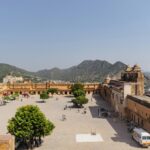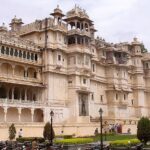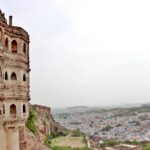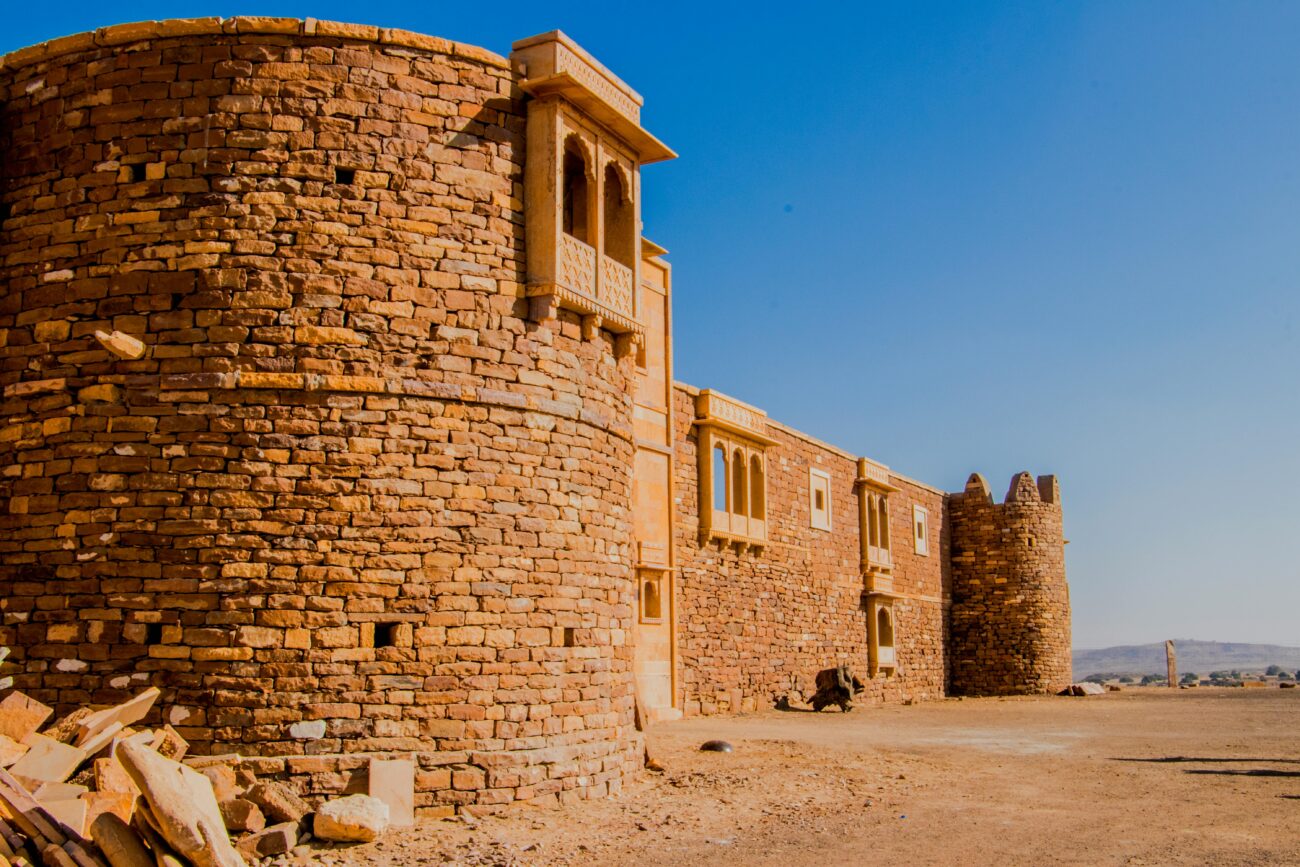
Rising like a mirage from the golden sands of the Thar Desert, Jaisalmer Fort stands as Rajasthan’s only living fort, a UNESCO World Heritage Site where history breathes within honey-colored sandstone walls. Built in 1156 by Rawal Jaisal, this 250-foot-high citadel, also known as Sonar Qila (Golden Fort), houses over 3,000 residents, vibrant havelis, and seven intricately carved Jain temples. A desert masterpiece akin to City Palace’s lakeside grandeur, Jaisalmer Fort blends Rajput valor with mercantile opulence. For visitors to indiatourisminfo.com, it offers a magical journey, from rooftop sunset views to camel safaris. With 2025 conservation efforts enhancing its golden glow and the Desert Festival’s cultural vibrancy, this “Golden City” icon is an unmissable destination for history enthusiasts, photographers, and travelers seeking Rajasthan’s desert heritage.
Key Attractions
Jain Temples: Seven 12th–16th-century temples with intricate marble carvings dedicated to Tirthankaras like Rishabhanatha.
Raj Mahal (Royal Palace): A seven-story palace with jharokhas, now a museum showcasing royal artifacts.
Laxminath Temple: A 15th-century Vishnu temple within the fort, revered by locals for blessings.
Havelis (Patwon Ki Haveli, Salim Singh Ki Haveli): Ornate merchant mansions with golden facades and frescoes, inside the fort.
Cannon Point: A bastion offering panoramic views of Jaisalmer’s golden skyline and Thar Desert.
Fort Walls and Bastions: 99 bastions with defensive architecture, ideal for history walks.
Rooftop Cafés: Heritage cafés like Killa Corner offering desert vistas and Rajasthani thalis.
Things to Do
Explore Jain Temples: Admire marble carvings and attend evening aarti (open 8 AM–12 PM, free entry).
Visit Raj Mahal Museum: Discover royal swords, paintings, and 2025 digital exhibits (~₹50 entry).
Sunset at Cannon Point: Capture Jaisalmer Fort’s golden glow over the Thar Desert (best 5–7 PM).
Attend Desert Festival: Enjoy camel races, turban-tying, and folk dances (February 14–16, 2026, tentative).
Shop in Fort Markets: Purchase Jadau jewelry, bandhani textiles, or camel leather at Sadar Bazaar.
Dine at Rooftop Cafés: Savor ker sangri, dal baati, or ghewar with desert views (~₹200–500).
Camel Safari from Fort Gates: Ride to Sam Sand Dunes for sunset and cultural shows (~₹800–1500).
Light and Sound Show: Experience Jaisalmer’s history narrated at the fort (7 PM, ~₹200, seasonal).
Local Culture and History
Jaisalmer Fort, founded in 1156 by Rawal Jaisal on Trikuta Hill, was a key Silk Route caravan hub, its golden sandstone quarried locally. Unlike most forts, it remains a living city with residents, havelis, and temples, earning UNESCO status in 2013. The Bhati Rajputs defended it against Alauddin Khilji and Mughal sieges, with 99 bastions symbolizing resilience. Local culture thrives with kalbelia and ghoomar dances, puppetry, and the Desert Festival, featuring moustache competitions and langa music. The 2025 ASI conservation, noted on X, includes wall reinforcement and digital heritage trails, while residents’ haveli homestays preserve Jaisalmer’s mercantile legacy, making the fort Rajasthan’s golden heartbeat.
Best Time to Visit
Jaisalmer Fort is best visited from October to March (winter, 5–25°C), ideal for exploring temples, attending Desert Festival (February 14–16, 2026, tentative), and enjoying cool desert nights. Diwali (November 1, 2025, tentative) lights up the fort with diyas. April to June (summer, 25–45°C) suits early morning (6–9 AM) or evening visits (post-5 PM) to avoid heat; carry hats and water. July to September (monsoon, 25–35°C, 200 mm precipitation) is off-season with fewer crowds but occasional sandstorms; carry scarves. Book camel safaris and rooftop cafés early for festival seasons (February, November) to secure spots in Jaisalmer.
How to Reach
By Air: Jaisalmer Airport (17 km, ~30-minute drive) has seasonal flights from Delhi and Jaipur. Taxis cost ~₹400–800. Jodhpur Airport (285 km, ~5-hour drive) offers broader connectivity.
By Train: Jaisalmer Railway Station (2 km, ~10-minute drive) connects to Delhi (Delhi-Jaisalmer Express), Jodhpur, and Jaipur. Taxis or auto-rickshaws cost ~₹100–200.
By Road: Jaisalmer is 570 km from Jaipur via NH62. Rajasthan Roadways buses, private taxis (~₹6000–8000 from Jaipur), or shared jeeps (~₹300–600) reach the fort. Self-driven cars have parking near Hanuman Circle (~₹50–100).
Local Transport: Hire auto-rickshaws (~₹50–150), cycle rickshaws (~₹30–100), or e-rickshaws (~₹20–50) in Jaisalmer; walk within the fort’s narrow lanes.
Camel Safari: Book at fort gates or via rajasthantourism.gov.in (~₹800–1500 to Sam Dunes).
Travel Tips
Booking: Entry free (fort), ~₹50 (Raj Mahal Museum); book camel safaris via Rajasthan Tourism; reserve guides (~₹300–500).
Cost: Food at cafés ~₹200–500; taxi from station ~₹100–200; hotels ~₹1500–4000/night (as of 2023; verify 2025 rates).
Dress: Wear comfortable shoes for uneven cobblestones; modest clothing for temples; scarves for sandstorms; light jackets for winter nights.
Safety: Secure valuables in crowded markets; follow camel safari guidelines; avoid summer midday heat (April–June).
Respect Local Culture: Maintain silence in Jain temples; seek permission for photography in havelis; support artisans at Sadar Bazaar for bandhani.
Connectivity: Mobile networks are reliable in Jaisalmer; Wi-Fi is available at cafés; carry cash for small vendors and autos.
Environment: Avoid littering to preserve UNESCO site; use designated bins; opt for eco-friendly camel operators.
Accessibility: Fort has steep, narrow paths; inform haveli staff for mobility assistance; no vehicle access inside.
Nearby Attractions
Patwon Ki Haveli (1 km): A cluster of five ornate merchant mansions with golden facades.
Sam Sand Dunes (40 km): Thar Desert dunes for camel safaris and cultural camps.
Gadisar Lake (1 km): A historic rainwater lake with temples and boating.
Bada Bagh (6 km): Royal cenotaphs with golden chhatris against desert backdrop.
Kuldhara Village (18 km): An abandoned “haunted” village with eerie ruins.
Explore More
Discover other Rajasthan treasures like the romantic City Palace Udaipur or majestic Amber Fort on our Rajasthan destinations page. Plan your desert adventure with indiatourisminfo.com today!