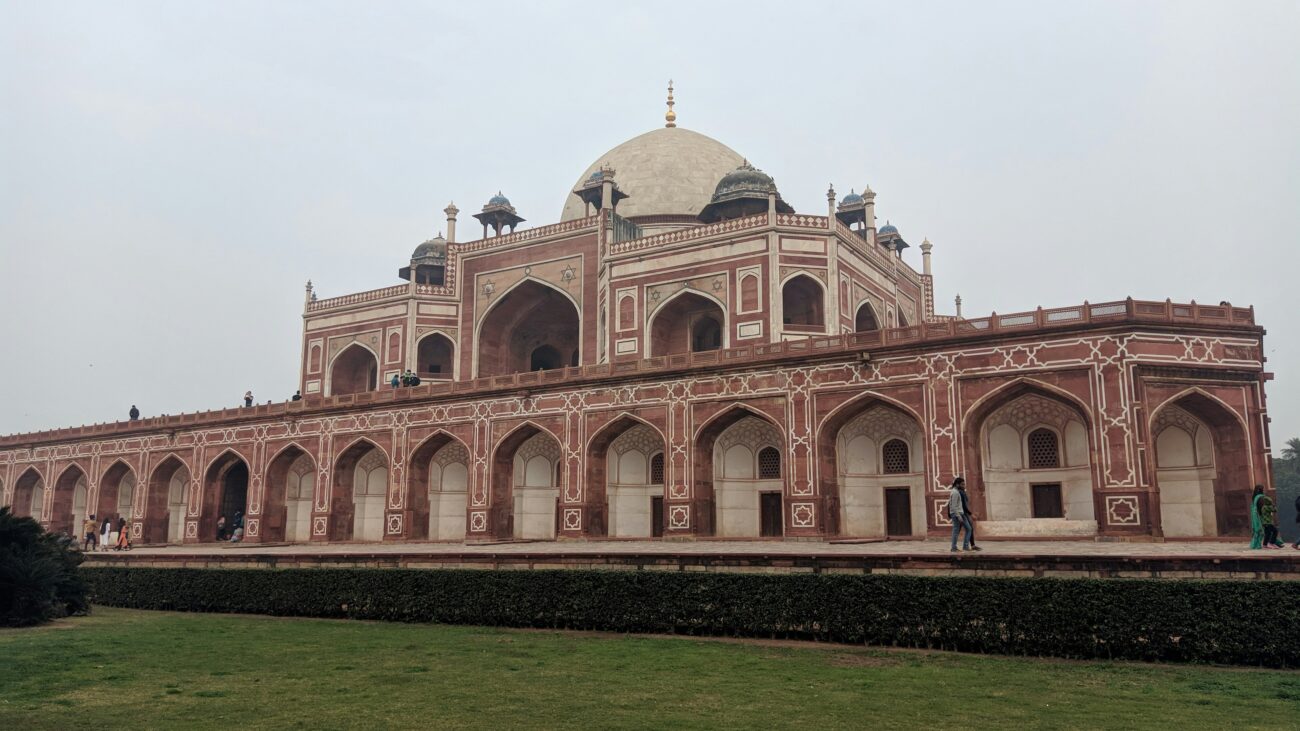
Emerging from Delhi’s historical heart like a timeless jewel, Humayun’s Tomb stands as a magnificent testament to Mughal architectural grandeur and imperial legacy. Located in Nizamuddin East at an altitude of 110 meters, this UNESCO World Heritage Site, completed in 1572, was commissioned by Empress Bega Begum for Emperor Humayun, marking the first garden-tomb in India. Its red sandstone dome, Persian-inspired design, and sprawling gardens set the stage for landmarks like the Taj Mahal. A cultural treasure akin to the serene Lotus Temple, it captivates history buffs and travelers with its symmetry and serenity. For visitors to indiatourisminfo.com, Humayun’s Tomb offers an enchanting journey, whether you’re exploring its intricate arches, strolling its charbagh gardens, or soaking in Delhi’s Mughal heritage. This iconic monument, blending history with architectural splendor, is an unmissable destination in North India for those seeking to delve into India’s imperial past.
Key Attractions
Humayun’s Tomb: The central mausoleum with a 42-meter dome, red sandstone, and white marble inlays.
Charbagh Gardens: Symmetrical Persian-style gardens divided into four parts, surrounding the tomb with water channels.
Isa Khan’s Tomb: A 16th-century octagonal tomb and mosque predating Humayun’s Tomb, showcasing early Mughal architecture.
Nila Gumbad: A blue-domed tomb outside the main complex, one of Delhi’s oldest Mughal structures.
Barber’s Tomb: A smaller tomb within the complex, adding intrigue to the site’s historical narrative.
Afsarwala Tomb and Mosque: A 16th-century structure with intricate plasterwork, part of the extended complex.
Bu Halima’s Tomb and Garden: A serene enclosure with a lesser-known tomb, enhancing the site’s historical depth.
Things to Do
Explore Humayun’s Tomb: Admire the mausoleum’s dome, arches, and intricate jali work, a precursor to the Taj Mahal.
Stroll Charbagh Gardens: Walk through the symmetrical gardens, enjoying water channels and serene pathways.
Visit Isa Khan’s Tomb: Discover its octagonal design and adjacent mosque, a gem of early Mughal art.
Photography: Capture the tomb’s red sandstone against lush gardens, especially at sunrise or sunset.
Tour Nila Gumbad: Explore this nearby blue-domed structure for a glimpse into pre-Mughal history.
Attend Mughal Garden Events: Visit during February–March (2025 dates TBD) for special garden openings and cultural programs.
Learn from ASI Plaques: Read informational boards for insights into Mughal architecture and the tomb’s restoration.
Relax in Gardens: Sit by water channels or under trees, soaking in the tranquil ambiance of the complex.
Local Culture and History
Commissioned in 1565 by Empress Bega Begum, Humayun’s Tomb was completed in 1572, designed by Persian architects Mirak Mirza Ghiyas and Sayyid Muhammad. As the first garden-tomb in India, it introduced the charbagh layout, influencing later Mughal monuments like the Taj Mahal. Built for Emperor Humayun, the second Mughal ruler, it symbolizes the empire’s architectural zenith. Restored by the Aga Khan Trust, it regained UNESCO status in 1993. The surrounding Nizamuddin area thrives with Delhi’s cosmopolitan culture, featuring Sufi music at nearby Nizamuddin Dargah and local delicacies like kebabs, biryani, and halwa. Markets sell handicrafts and silver jewelry, echoing Surajkund’s artisanal vibe. Festivals like Urs at Nizamuddin Dargah and Diwali bring vibrancy, offering visitors a blend of Mughal history and Delhi’s dynamic cultural scene, akin to Qutub Minar’s medieval charm.
Best Time to Visit
Humayun’s Tomb is a year-round destination, with October to March (autumn and winter, 5–25°C) ideal for exploring the gardens and tombs, thanks to cool weather and clear skies. February–March is vibrant with Mughal Garden openings, drawing crowds. April to June (spring and summer, 20–45°C) is suitable for early morning (9 AM) or evening visits (post-4 PM) to avoid heat; shaded gardens provide relief. The monsoon (July–September) enhances the greenery but makes paths slippery; carry umbrellas. Early mornings offer fewer crowds and soft light for photography, while evenings (4–6 PM) are serene with illuminated views. The site is open daily. Book tickets online for peak seasons (October–March) or garden events to avoid queues.
How to Reach
By Air: The nearest airport is Indira Gandhi International Airport (Delhi, 15 km away, ~30-minute drive), with flights from Mumbai, Bengaluru, and international hubs. Taxis from the airport cost ~₹500–1000.
By Train: The nearest railway station is Hazrat Nizamuddin (3 km, ~10-minute drive), with trains from Mumbai, Kolkata, and Amritsar. Taxis or auto-rickshaws from the station cost ~₹50–200. New Delhi Railway Station (10 km, ~20 minutes) is another option.
By Road: Humayun’s Tomb is accessible via NH48 from Gurugram (25 km, 45 minutes) or Noida (15 km, 30 minutes). DTC buses, private taxis (~₹400–800 from Delhi areas), or shared cabs (~₹100–200) are available. Self-driven cars have parking nearby.
Local Transport: The nearest metro is JLN Stadium (Violet Line, 2 km, ~10-minute walk). Auto-rickshaws (~₹50–100) or cycle rickshaws (~₹20–50) connect the metro to the tomb.
Travel Tips
Booking: Purchase tickets online via ASI or third-party platforms to skip queues; check Mughal Garden schedules for February–March 2025.
Cost: Entry ~₹40 for Indians, ₹600 for foreigners; camera fees may apply (as of 2023; verify current rates).
Dress: Wear comfortable clothing and shoes for walking; modest attire for respect; carry hats or umbrellas for sun or rain.
Safety: Secure valuables in crowded areas; follow ASI guidelines; avoid stray paths in lesser-visited tombs.
Respect Local Culture: Maintain silence near tombs; seek permission before photographing ceremonies at nearby Nizamuddin Dargah; bargain politely in local markets.
Connectivity: Mobile networks are reliable; Wi-Fi is unavailable at the site; carry cash for vendors and rickshaws.
Environment: Avoid littering to preserve the UNESCO site; use designated bins.
Accessibility: The main tomb and gardens have ramps; some areas have steps; inform staff for assistance.
Nearby Attractions
Lotus Temple (8 km): A Bahá’í House of Worship with lotus-shaped architecture and serene gardens.
India Gate (8 km): A majestic war memorial with sprawling lawns and Amar Jawan Jyoti.
Qutub Minar (10 km): A UNESCO World Heritage Site, a 12th-century minaret with intricate carvings.
Nizamuddin Dargah (3 km): A Sufi shrine with qawwali performances and spiritual ambiance.
Red Fort (12 km): A UNESCO-listed Mughal fortress famous for its red sandstone and history.
Explore More
Discover other Delhi treasures like the serene Lotus Temple or patriotic India Gate on our Delhi destinations page. Plan your historical and cultural journey with indiatourisminfo.com today!