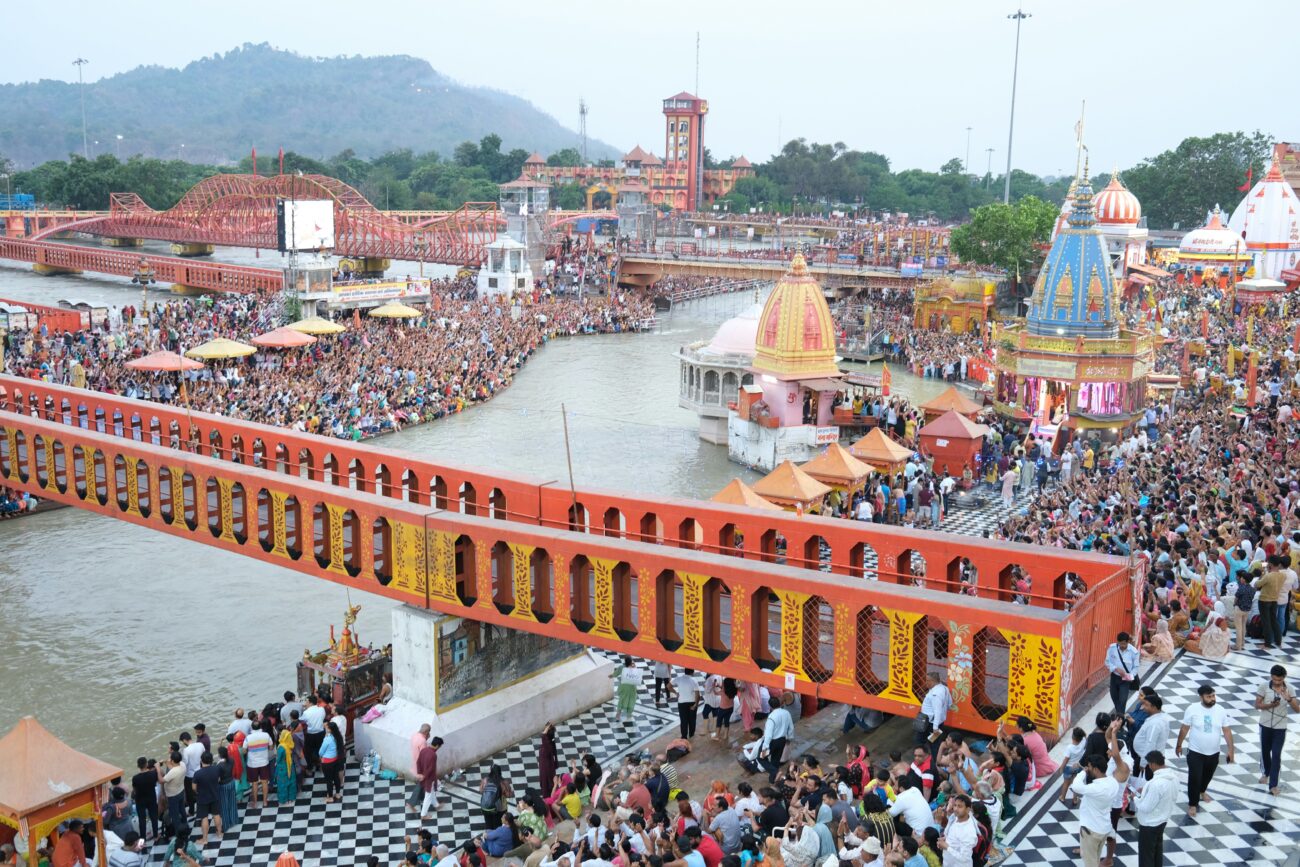
Nestled at the edge of the Himalayas where the Ganga descends from the mountains, Haridwar stands as one of India’s holiest cities, revered as a spiritual beacon in Uttarakhand. Situated at 314 meters, this ancient pilgrimage center, meaning “Gateway to God,” draws millions for its sacred ghats, vibrant Ganga Aarti, and historic temples like Mansa Devi. As one of the seven holiest cities in Hinduism, Haridwar is a hub for devotees, yogis, and travelers seeking spiritual solace and cultural immersion. The rhythmic chants, glowing lamps, and flowing Ganga create an ethereal ambiance, especially during the Kumbh Mela. For visitors to indiatourisminfo.com, Haridwar offers a profound journey, whether you’re participating in sacred rituals, exploring bustling markets, or soaking in the divine energy of the Ganga. This sacred city, blending spirituality with Himalayan beauty, is an unmissable destination in North India, inviting travelers to experience its timeless sanctity and vibrant traditions.
Key Attractions
Har Ki Pauri: The most sacred ghat, famous for its evening Ganga Aarti and mythological significance.
Mansa Devi Temple: A hilltop temple dedicated to Goddess Mansa, accessible by cable car with panoramic views.
Chandi Devi Temple: Another hilltop shrine dedicated to Goddess Chandi, offering spiritual and scenic allure.
Bharat Mata Temple: A unique multi-story temple dedicated to Mother India, showcasing national heritage.
Shantikunj Ashram: A spiritual center for yoga, meditation, and the Gayatri Mantra, founded by the All World Gayatri Pariwar.
Maya Devi Temple: An ancient temple linked to the heart and navel of Goddess Sati, a Shakti Peetha.
Ganga River: The lifeline of Haridwar, revered for its purifying waters and spiritual significance.
Things to Do
Attend Ganga Aarti: Witness the mesmerizing evening Aarti at Har Ki Pauri, with lamps and chants by the Ganga.
Visit Mansa Devi Temple: Take a cable car or trek to this hilltop temple for blessings and valley views.
Explore Har Ki Pauri: Take a holy dip in the Ganga or participate in rituals at this sacred ghat.
Shop at Bara Bazaar: Buy religious items, Rudraksha beads, and local sweets like peda and jalebi.
Meditate at Shantikunj: Join yoga or meditation sessions at this serene ashram for spiritual rejuvenation.
Photography: Capture the glowing Aarti, colorful ghats, and temple architecture, especially at sunset.
Visit Chandi Devi Temple: Ride the ropeway or trek to this sacred shrine for spiritual and scenic experiences.
Attend Kumbh Mela: Experience the grand pilgrimage festival (next in 2033, smaller Ardh Kumbh in 2027) for cultural immersion.
Local Culture and History
Haridwar’s spiritual legacy dates back to ancient Vedic times, revered as one of the seven holiest cities (Sapta Puri) in Hinduism. Mythologically, it’s where the Ganga descends from heaven, and a drop of Amrita (nectar) fell during the Samudra Manthan, making it a Kumbh Mela site every 12 years. The city’s name derives from “Hari” (Lord Vishnu) and “Dwar” (gateway), reflecting its role as a spiritual portal. The local Garhwali culture is vibrant, with devotees and sadhus chanting mantras, performing rituals, and offering hospitality. Cuisine includes sattvic vegetarian dishes like kheer, aloo puri, and rabri, available at local dhabas. Markets sell religious artifacts, ayurvedic herbs, and Gangajal (holy Ganga water). Festivals like Kumbh Mela, Kanwar Yatra (July–August), and Diwali bring Haridwar alive with processions and prayers, offering visitors a deep dive into its spiritual and cultural richness.
Best Time to Visit
Haridwar is a year-round destination, with each season offering unique experiences. October to March (autumn and winter, 5–25°C) is ideal for sightseeing, temple visits, and Ganga Aarti, with cool weather and clear skies. February–March aligns with festivals like Shivratri, attracting spiritual seekers. Summer (April–June, 20–35°C) is suitable for ashram stays and early morning visits, though it’s warmer; evening Aartis provide relief. The monsoon (July–September) brings moderate rain, making ghats slippery but enhancing the Ganga’s flow, ideal for rituals. Avoid peak monsoon for safety due to potential flooding. Early mornings offer serene views for photography, while evenings are perfect for Aarti. Plan around Kanwar Yatra (July–August) or smaller Ardh Kumbh (2027) for cultural immersion, but book accommodations early during festivals or peak seasons.
How to Reach
By Air: The nearest airport is Jolly Grant Airport (Dehradun, 40 km away, ~1-hour drive), with flights from Delhi, Mumbai, and Bengaluru. Taxis from Dehradun cost ~₹1000–2000.
By Train: Haridwar Junction (2 km from Har Ki Pauri, ~10-minute drive) is well-connected to Delhi, Mumbai, Kolkata, and Amritsar. Taxis or auto-rickshaws from the station cost ~₹100–300.
By Road: Haridwar is accessible via NH7 from Delhi (200 km, 4–5 hours) or Dehradun (40 km, 1 hour). HRTC buses, private taxis (~₹3000–5000 from Delhi), or shared cabs (~₹400–700 from Dehradun) are available. Self-driven cars are common.
Local Transport: In Haridwar, walk along ghats or hire auto-rickshaws (~₹50–200) or taxis (~₹200–500) for local sights; cycle rickshaws (~₹20–50) connect Har Ki Pauri to nearby temples.
Travel Tips
Booking: Reserve hotels or ashram stays in advance during peak seasons (October–March) or festivals like Kanwar Yatra.
Cost: Ganga Aarti is free; Mansa Devi cable car ~₹100–200; temple entry is free (as of 2023; verify current rates).
Dress: Pack light layers for summer, warm layers for winter; modest clothing for ghats and temples; comfortable shoes for walking.
Safety: Avoid swimming in the Ganga due to strong currents; stick to designated areas for dips; beware of crowds during festivals.
Connectivity: Mobile networks are reliable; Wi-Fi is available at hotels and cafes; carry cash for small vendors and rickshaws.
Environment: Avoid littering to preserve the Ganga’s sanctity; use designated bins.
Respect Local Culture: Dress modestly at ghats and temples; seek permission before photographing sadhus or rituals.
Health: Stay hydrated; carry sunscreen for daytime visits; avoid street food during monsoon for hygiene.
Nearby Attractions
Rishikesh (25 km): A spiritual hub with Ganga Aarti, yoga ashrams, and river rafting.
Dehradun (40 km): Uttarakhand’s capital with Robber’s Cave, Sahastradhara, and Forest Research Institute.
Mussoorie (80 km): A hill station with Kempty Falls, Mall Road, and colonial charm.
Rajaji National Park (15 km): A wildlife sanctuary for elephant safaris and birdwatching.
Neer Garh Waterfall (30 km): A scenic waterfall near Rishikesh, ideal for treks and picnics.
Explore More
Discover other Uttarakhand treasures like the vibrant Rishikesh or the charming Mussoorie on our Uttarakhand destinations page. Plan your Himalayan adventure with indiatourisminfo.com today!