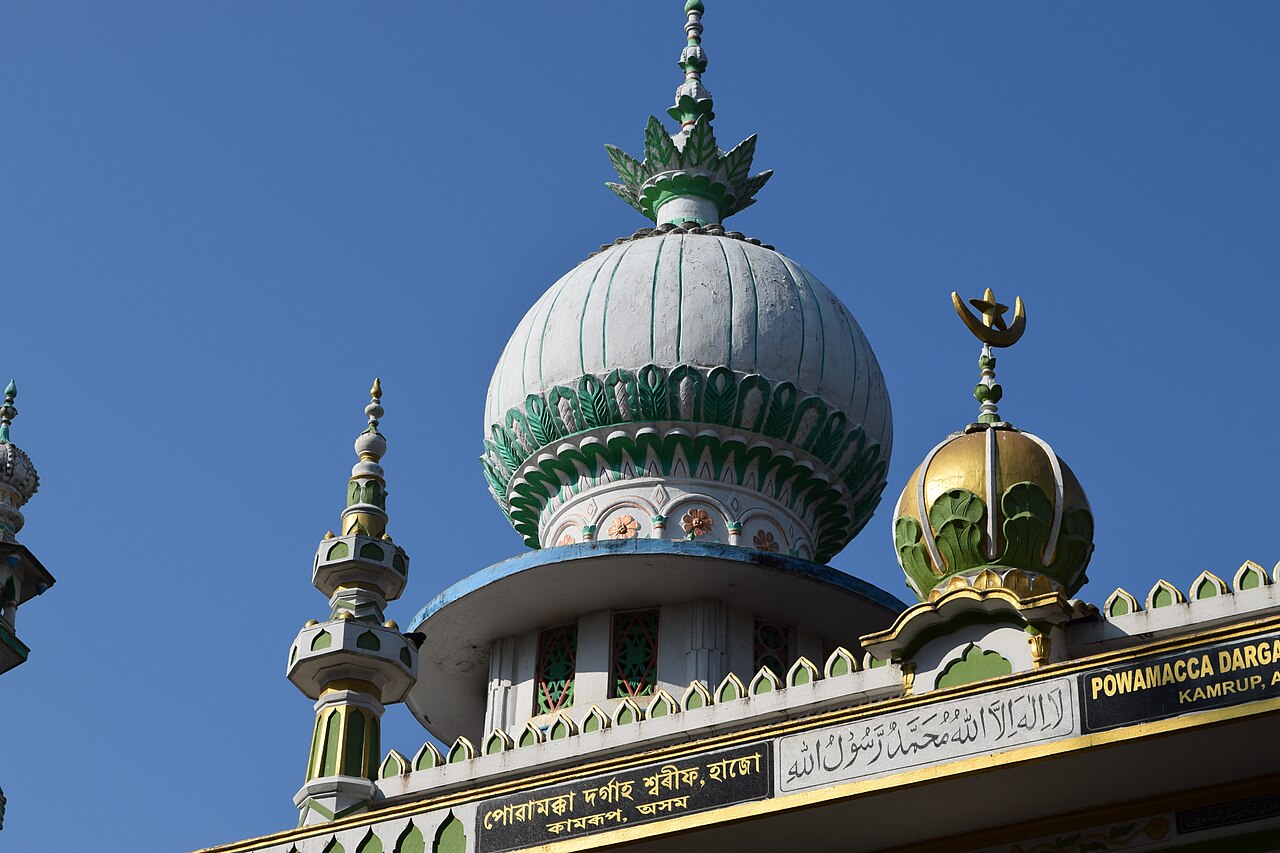
Nestled like a spiritual confluence on the banks of the Brahmaputra River, Hajo’s Powa Mecca stands as a revered Muslim shrine atop Garurachal Hill, embodying Assam’s unique interfaith harmony. Located 24 km from Guwahati in Kamrup district, this 17th-century mosque, built by Sujauddin Mohammed Shah during Mughal emperor Shah Jahan’s reign, is believed to hold soil from Mecca, offering one-fourth the sanctity of a Haj pilgrimage. A sacred site akin to the cultural depth of Sivasagar, Powa Mecca attracts Muslims, Hindus, and Buddhists, reflecting Hajo’s religious diversity. For visitors to indiatourisminfo.com, Hajo – Powa Mecca offers a profound journey, from offering prayers at the tomb of Pir Giyasuddin Auliya to exploring nearby temples. This pilgrimage hub, celebrated for its Sufi legacy, is an unmissable destination for spiritual seekers, history enthusiasts, and travelers seeking Assam’s pluralistic heritage.
Key Attractions
Powa Mecca Mosque: A 1657-built mosque on Garurachal Hill, housing the tomb of Pir Giyasuddin Auliya, believed to contain sacred soil from Mecca.
Hayagriva Madhava Temple: A 10th-century Vishnu temple on Monikut Hill, sacred to Hindus and Buddhists, believed to be Buddha’s Nirvana site.
Kedareswara Temple: A historic Shiva temple on Madanachala Hill with a self-manifested linga, built during the Ahom king Rajeswar Singha’s reign.
Ganesha Temple (Deva Bhavana): An ancient shrine serving as a meeting point for local deities, revered by Hindus.
Brahmaputra River Viewpoint: A scenic spot near Hajo, ideal for river views and photography.
Dhoparguri Satra: A Vaishnavite monastery teaching Srimanta Sankardeva’s teachings, showcasing Assamese culture.
Hajo Bell Metal Market: A hub for Assam’s renowned bell metal and brass handicrafts, a cultural highlight.
Things to Do
Offer Prayers at Powa Mecca: Participate in prayers at the mosque or light candles at Pir Giyasuddin Auliya’s tomb, especially during Urs (February 2026, tentative).
Visit Hayagriva Madhava Temple: Explore this Vishnu temple and learn about its Hindu-Buddhist significance (open 6 AM–8 PM).
Attend Urs Festival: Join the interfaith Urs celebrations on Maghi Purnima (February 2026, tentative) with animal donations and prayers.
Explore Kedareswara Temple: Offer prayers at this ancient Shiva temple, known for its inscriptions from 1753.
Shop for Bell Metal Crafts: Purchase brass utensils or silk mekhela chador at Hajo’s markets, famous across Asia.
Boat Ride on Brahmaputra: Enjoy a serene river cruise for birdwatching or sunset views (book via local operators, ~₹500–1000).
Celebrate Bohag Bihu: Join Assam’s harvest festival with Bihu dances and feasts (April 13–15, 2026, tentative).
Savor Local Cuisine: Relish masor tenga, pitha, or bamboo shoot curry at local eateries like Hajo’s Brahmaputra Restaurant.
Local Culture and History
Hajo, a historic town in Kamrup district, is a rare interfaith pilgrimage center for Hindus, Muslims, and Buddhists, with Powa Mecca as a cornerstone of its Islamic heritage. Built in 1657 by Sujauddin Mohammed Shah, Powa Mecca is the tomb of Pir Giyasuddin Auliya, a 12th-century Chishtiya Sufi who brought Islam to Assam, reportedly using soil from Mecca. The name “Powa” (Assamese for one-fourth) reflects the belief that prayers here yield a quarter of Mecca’s spiritual merit. Hajo’s cultural tapestry includes the Hajong tribe, believed to be descendants of the Kshatriya clan, and Assamese traditions like Bihu dances and silk weaving. Festivals like Urs and Bohag Bihu feature husori songs and rice-based delicacies, akin to Majuli’s vibrancy. Recent interfaith processions, supported by Assam Tourism and highlighted on X, underscore Hajo’s communal harmony, with preservation efforts maintaining Powa Mecca’s sanctity.
Best Time to Visit
Hajo – Powa Mecca is a year-round destination, with October to March (winter, 8–25°C) ideal for exploring the mosque, temples, and Brahmaputra River due to pleasant weather. The Urs festival on Maghi Purnima (February 2026, tentative) draws interfaith pilgrims for spiritual events. Bohag Bihu (April 13–15, 2026, tentative) offers vibrant cultural experiences, though temperatures rise (20–30°C). July to September (monsoon, 24–32°C, 1928 mm precipitation) brings lush scenery but slippery hill paths; carry raincoats and sturdy shoes. April to June (summer, 24–35°C) suits early morning (6–9 AM) or evening visits (post-4 PM) to avoid heat. Book accommodations early for festival seasons (February, April) to secure spots in Hajo or Guwahati.
How to Reach
By Air: The nearest airport is Lokpriya Gopinath Bordoloi International Airport (Guwahati, 24 km, ~40-minute drive), with flights from Delhi, Mumbai, and Kolkata. Taxis cost ~₹500–1000.
By Train: Guwahati Railway Station (24 km, ~40-minute drive) is a major hub with trains from Delhi, Kolkata, and Dibrugarh. Taxis or auto-rickshaws cost ~₹100–300.
By Road: Hajo is accessible via NH27 from Guwahati (24 km, 40 minutes) or Jorhat (300 km, 6 hours). Assam STC buses, private taxis (~₹500–1000 from Guwahati), or shared autos (~₹50–100) reach Hajo. Self-driven cars have parking near Garurachal Hill.
Local Transport: Hire taxis (~₹300–600), auto-rickshaws (~₹50–150), or bikes (~₹100–300/day) in Hajo; local buses (~₹10–30) connect to Powa Mecca and temples.
Travel Tips
Booking: No entry fee for Powa Mecca; book accommodations in Guwahati or Hajo early for Urs or Bihu; contact Assam Tourism for guided tours (~₹200–500).
Cost: Food at eateries ~₹50–200; taxi from Guwahati ~₹500–1000; budget homestays ~₹800–1500/night (as of 2023; verify 2025 rates).
Dress: Wear modest clothing (cover shoulders and knees) for Powa Mecca and temples; women must cover heads at the mosque; carry scarves and sturdy shoes.
Safety: Secure valuables during festivals; follow guide instructions on hills; avoid monsoon travel (July–September) due to flooding risks.
Respect Local Culture: Maintain silence during prayers; seek permission for photography in sacred areas; support artisans at Hajo’s bell metal market.
Connectivity: Mobile networks are reliable in Hajo; Wi-Fi is limited to hotels; carry cash for small vendors and autos.
Environment: Avoid littering to preserve sacred sites; use designated bins; opt for eco-friendly homestays.
Accessibility: Powa Mecca involves a hill climb; inform staff for mobility assistance; flat paths at Hayagriva Madhava Temple are more accessible.
Nearby Attractions
Kamakhya Temple (30 km): A sacred Shakti Peeth in Guwahati with vibrant rituals.
Sualkuchi (10 km): Assam’s silk-weaving hub, famous for mekhela chador production.
Madan Kamdev (42 km): An archaeological site with erotic sculptures and a museum.
Kaziranga National Park (220 km): A UNESCO site for one-horned rhinos and safaris.
Majuli Island (300 km): The world’s largest river island with Satra monasteries.
Explore More
Discover other Assam treasures like the spiritual Kamakhya Temple or cultural Majuli Island on our Assam destinations page. Plan your spiritual and cultural journey with indiatourisminfo.com today!