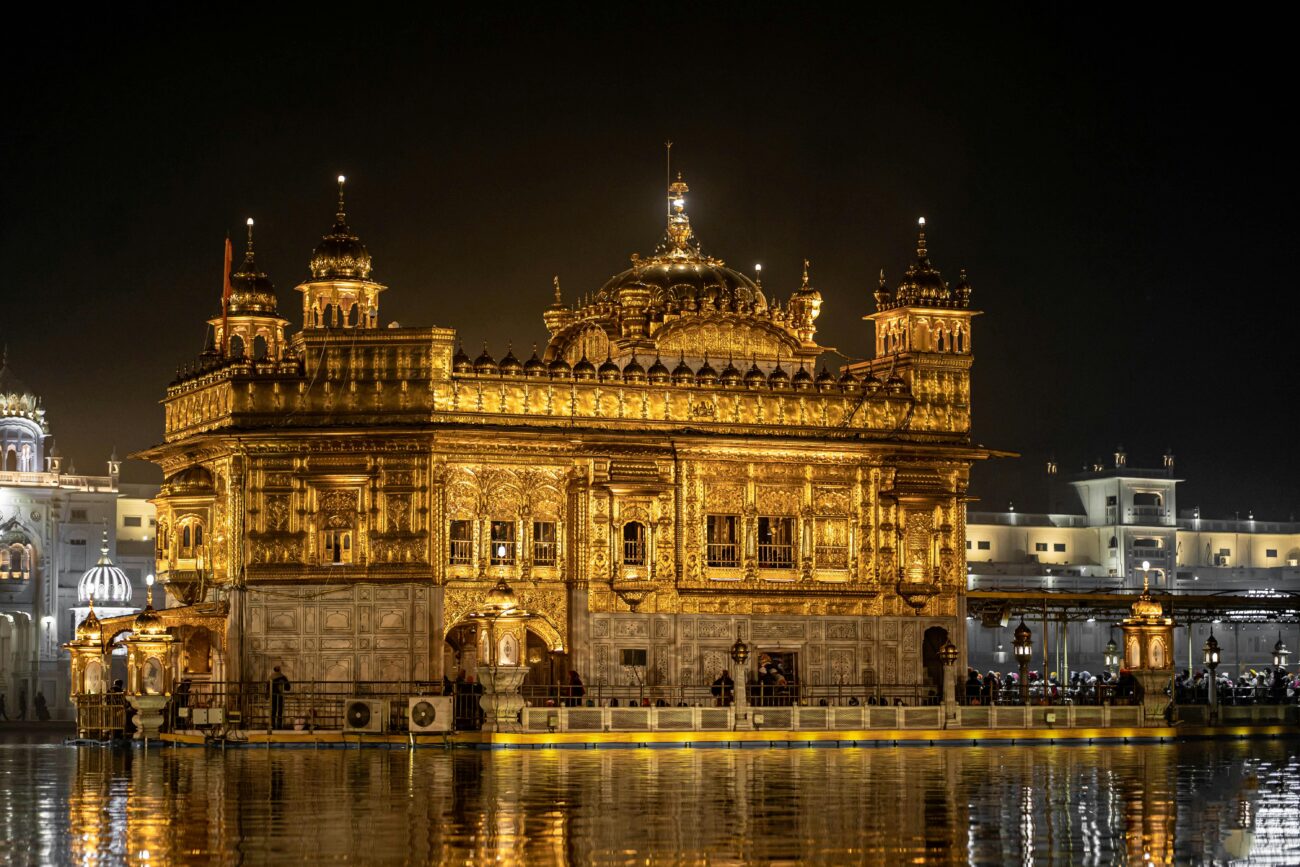
Glowing like a radiant jewel in the heart of Amritsar, the Golden Temple, or Sri Harmandir Sahib, stands as the holiest shrine of Sikhism, captivating visitors with its spiritual serenity and architectural splendor. Located in Punjab at an altitude of 158 meters, this sacred site, surrounded by the tranquil Amrit Sarovar, draws millions of devotees and travelers seeking peace, equality, and cultural immersion. Founded by Guru Ram Das in the 16th century and adorned with gold by Maharaja Ranjit Singh, the temple embodies Sikh principles of service and humility, exemplified by its free community kitchen (langar). Its marble pathways, intricate frescoes, and soulful kirtans create an ethereal ambiance, akin to the spiritual pull of Badrinath or Haridwar. For visitors to indiatourisminfo.com, the Golden Temple offers a transformative experience, whether you’re joining prayers, savoring langar, or exploring Amritsar’s vibrant heritage. This iconic shrine, blending spirituality with architectural brilliance, is a must-visit in North India.
Key Attractions
Golden Temple (Sri Harmandir Sahib): The central Sikh shrine with a gold-plated dome, housing the Guru Granth Sahib and surrounded by the Amrit Sarovar.
Amrit Sarovar: The holy tank where pilgrims bathe for spiritual purification, reflecting the temple’s golden glow.
Akal Takht: The highest temporal seat of Sikhism, opposite the Golden Temple, symbolizing justice and governance.
Langar Hall: A community kitchen serving free meals to thousands daily, embodying equality and service.
Central Sikh Museum: A museum within the complex showcasing Sikh history, artifacts, and paintings.
Guru Ram Das Niwas: A pilgrim rest house offering simple accommodations and spiritual ambiance.
Clock Tower (Gurudwara Entrance): An ornate entry gate to the complex, blending Mughal and Sikh architecture.
Things to Do
Visit Golden Temple: Participate in morning or evening prayers, listen to kirtans, and admire the temple’s golden splendor.
Join Langar: Volunteer at the community kitchen or savor a free meal, experiencing Sikh values of equality.
Bathe in Amrit Sarovar: Take a dip in the holy tank for spiritual cleansing, following temple protocols.
Explore Akal Takht: Learn about its historical and religious significance as the seat of Sikh authority.
Photography: Capture the temple’s shimmering reflection, marble pathways, and vibrant devotees, especially at sunrise or dusk.
Visit Central Sikh Museum: Discover Sikh history through relics, manuscripts, and warrior artifacts.
Attend Festivals: Experience Gurpurab or Vaisakhi (April) for vibrant celebrations, processions, and nagar kirtans.
Stroll Parikrama: Walk the marble pathway around the sarovar, soaking in the temple’s serene ambiance.
Local Culture and History
The Golden Temple’s history began in 1577 when Guru Ram Das founded the Amrit Sarovar, with the temple’s foundation laid by Guru Arjan Dev in 1588. Completed in 1604, it houses the Guru Granth Sahib, Sikhism’s eternal scripture. Maharaja Ranjit Singh gilded the upper structure in the 19th century, earning its “Golden” moniker. The temple has endured historical upheavals, including invasions and Operation Blue Star (1984), yet remains a symbol of resilience and unity. Amritsar’s Punjabi culture thrives around it, with locals known for their hospitality, bhangra dances, and vibrant attire. The langar, serving dal, roti, and kheer, reflects Sikh principles of seva (service) and equality. Markets near the temple sell juttis, phulkari embroidery, and Sikh symbols like the Khanda. Festivals like Vaisakhi and Gurpurab fill Amritsar with music and processions, offering visitors a deep dive into Punjab’s rich Sikh and cultural heritage.
Best Time to Visit
The Golden Temple is a year-round destination, with each season offering unique experiences. October to March (autumn and winter, 5–25°C) is ideal for visiting, with cool weather perfect for exploring the complex and nearby markets, though winter mornings are chilly. April to June (spring and summer, 20–40°C) is suitable for early morning or evening visits to avoid heat; the temple’s marble stays cool. The monsoon (July–September) brings moderate rain, making pathways slippery, but the sarovar’s reflection is stunning; carry umbrellas. Early mornings (3–6 AM) offer serene prayers like Asa di Var, while evenings (6–9 PM) are vibrant with Rehras Sahib and night views. Plan around Vaisakhi (April) or Gurpurab (November) for cultural immersion, but book accommodations early during festivals or peak seasons (October–March).
How to Reach
By Air: The nearest airport is Sri Guru Ram Dass Jee International Airport (Amritsar, 11 km away, ~20-minute drive), with flights from Delhi, Mumbai, and Bengaluru. Taxis from the airport cost ~₹500–1000.
By Train: Amritsar Junction (2 km from the temple, ~10-minute drive) is well-connected to Delhi, Mumbai, Kolkata, and Chandigarh. Auto-rickshaws or taxis from the station cost ~₹100–300.
By Road: Amritsar is accessible via NH3 from Delhi (450 km, 8–10 hours) or Chandigarh (230 km, 4–5 hours). HRTC buses, private taxis (~₹6000–8000 from Delhi), or shared cabs (~₹500–1000 from Chandigarh) are available. Self-driven cars are common.
Local Transport: In Amritsar, walk to the temple (vehicle-free zone) or hire auto-rickshaws (~₹50–200) or taxis (~₹200–500) for nearby sites; cycle rickshaws (~₹20–50) are available near the temple.
Travel Tips
Booking: Reserve hotels or gurudwara accommodations in advance during peak seasons (October–March) or festivals like Vaisakhi.
Cost: Temple entry and langar are free; museum entry is free; donations are voluntary (as of 2023; verify current rates).
Dress: Wear modest clothing covering shoulders and legs; headscarves (provided at entry) are mandatory for all; remove shoes and wash feet before entering.
Safety: Follow temple guidelines; avoid crowded areas during festivals; keep valuables secure in free lockers.
Respect Local Culture: Maintain silence during prayers; avoid smoking or alcohol near the temple; seek permission before photographing devotees or rituals.
Connectivity: Mobile networks are reliable; Wi-Fi is limited; carry cash for small vendors and rickshaws.
Environment: Avoid littering to preserve the temple’s sanctity; use designated bins.
Health: Stay hydrated; avoid heavy meals before langar to respect portions; carry sunscreen for daytime visits.
Nearby Attractions
Jallianwala Bagh (1 km): A historic garden commemorating the 1919 massacre, with a memorial and museum.
Wagah Border (30 km): The India-Pakistan border famous for its vibrant Beating Retreat Ceremony.
Durgiana Temple (2 km): A Hindu temple resembling the Golden Temple, dedicated to Goddess Durga.
Partition Museum (1 km): A museum in Amritsar’s Town Hall chronicling the 1947 India-Pakistan partition.
Gobindgarh Fort (3 km): A historic fort with museums, cultural shows, and light-and-sound performances.
Explore More
Discover other Punjab treasures like the historic Lahore or the serene Anandpur Sahib on our Punjab destinations page. Plan your spiritual journey with indiatourisminfo.com today!