Nestled like a forgotten jewel in the arid plains near Agra, Fatehpur Sikri stands as a magnificent testament to the Mughal Empire’s architectural genius and fleeting glory. Located in Uttar Pradesh at an altitude of 180 meters, this UNESCO World Heritage Site, built by Emperor Akbar in 1571, served as the Mughal capital for 14 years before its abandonment. Its red sandstone palaces, mosques, and courtyards, including the iconic Buland Darwaza, exude regal splendor, rivaling the Taj Mahal’s grandeur. A historical marvel akin to Varanasi’s spiritual depth, Fatehpur Sikri captivates with its blend of Persian, Indian, and Islamic artistry. For visitors to indiatourisminfo.com, this deserted city offers an immersive journey, whether you’re exploring its royal halls, marveling at intricate carvings, or tracing Akbar’s legacy. This architectural masterpiece, frozen in time, is an unmissable destination in North India for history enthusiasts and cultural explorers.
Key Attractions
Buland Darwaza: The 54-meter-high “Gate of Magnificence,” a grand entrance with intricate carvings and inscriptions.
Jama Masjid: A sprawling mosque with a vast courtyard, housing the tomb of Sufi saint Salim Chishti.
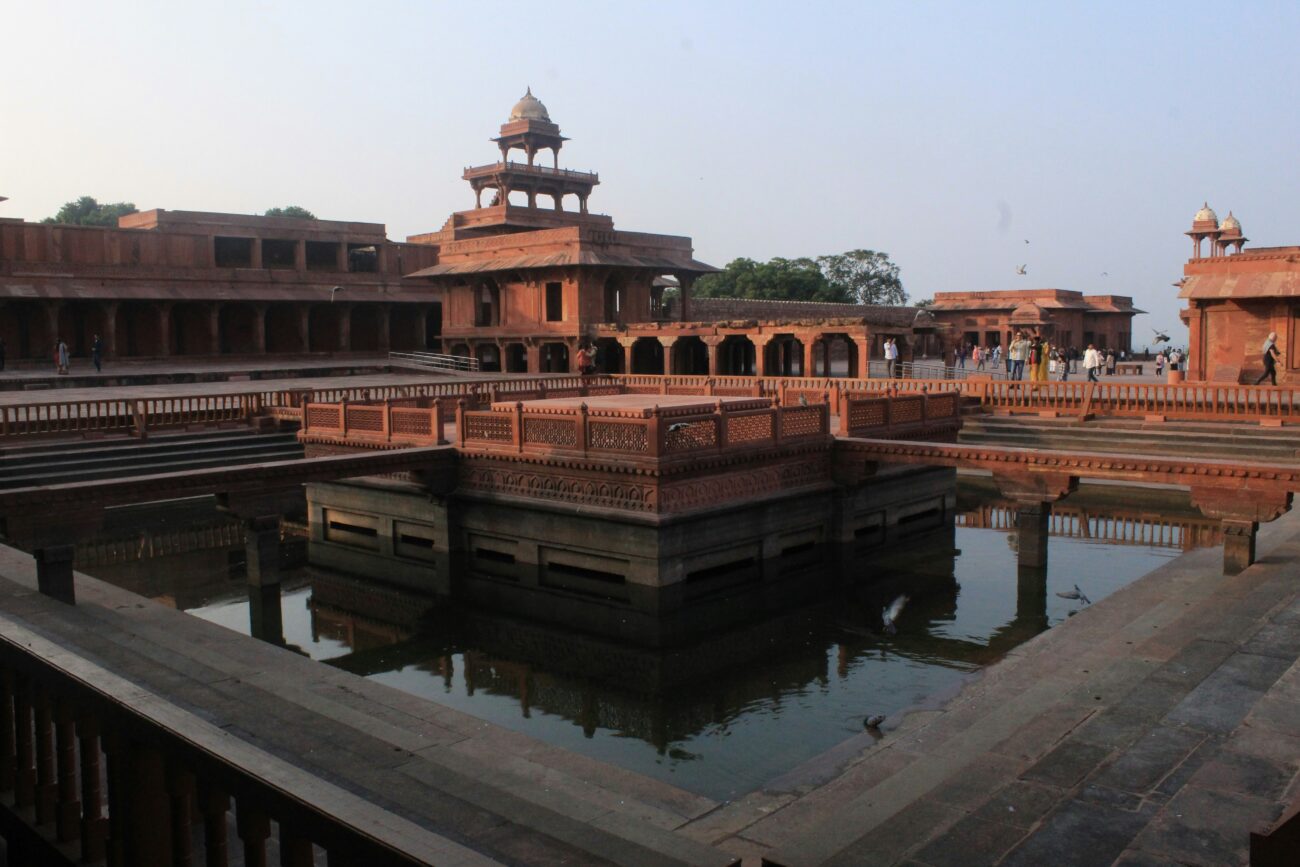
Panch Mahal: A five-story open pavilion with 176 columns, showcasing Mughal architectural elegance.
Diwan-i-Khas: The Hall of Private Audience, featuring a central carved pillar for Akbar’s discussions.
Jodha Bai’s Palace: A regal residence blending Hindu and Mughal architectural styles, built for Akbar’s queen.
Anup Talao: A decorative pool with a central platform, once used for musical performances.
Tomb of Salim Chishti: A white marble shrine within Jama Masjid, revered for its spiritual significance.
Things to Do
Explore Buland Darwaza: Admire the towering gateway’s red sandstone and calligraphy, a symbol of Akbar’s victories.
Visit Jama Masjid: Wander the mosque’s courtyard and pray at Salim Chishti’s tomb for blessings.
Tour Panch Mahal: Marvel at its open-air design and panoramic views from the top tier.
Discover Diwan-i-Khas: Study the intricate central pillar, a unique feature of Mughal architecture.
Photography: Capture the red sandstone structures and symmetrical courtyards, especially at sunrise or sunset.
Explore Jodha Bai’s Palace: Admire its blend of Rajput and Mughal designs, reflecting cultural harmony.
Attend Cultural Events: Join occasional ASI-organized heritage walks or festivals (check 2025 schedules).
Shop in Local Markets: Buy marble souvenirs, handicrafts, and peda sweets in nearby Fatehpur Sikri town.
Local Culture and History
Founded in 1571 by Emperor Akbar to honor Sufi saint Salim Chishti, Fatehpur Sikri was the Mughal capital until 1585, when water scarcity led to its abandonment. Built entirely of red sandstone, it showcases Akbar’s vision of cultural synthesis, blending Persian, Indian, and Islamic styles. The city’s UNESCO status (1986) reflects its architectural significance, with sites like Buland Darwaza commemorating Akbar’s Gujarat conquest. The nearby town thrives with Uttar Pradesh’s vibrant culture, offering biryani, kheer, and tikki. Local artisans sell leather goods and miniature paintings, echoing Surajkund’s craft heritage. Festivals like Diwali and Eid bring music and lights, while the legacy of Salim Chishti draws pilgrims, akin to Varanasi’s spiritual allure. Fatehpur Sikri’s blend of Mughal history and local traditions offers visitors an immersive dive into India’s imperial and cultural past.
Best Time to Visit
Fatehpur Sikri is best visited from October to March (autumn and winter, 5–25°C), when cool weather is ideal for exploring the open-air complex and nearby Agra. April to June (spring and summer, 20–45°C) is suitable for early morning (8 AM) or evening visits (post-4 PM) to avoid heat; shaded courtyards provide relief. The monsoon (July–September) brings rain, making stone paths slippery; carry umbrellas. Early mornings offer fewer crowds and soft light for photography, while evenings provide cooler temperatures and serene views. The site is open daily. Book accommodations in Agra early for peak seasons (October–March) or during nearby Taj Mahotsav (February 2025, dates TBD) to secure spots.
How to Reach
By Air: The nearest airport is Agra Airport (Kheria, 40 km away, ~1-hour drive), with limited domestic flights. Alternatively, use Indira Gandhi International Airport (Delhi, 240 km, ~4-hour drive). Taxis from Delhi cost ~₹3500–6000.
By Train: The nearest railway station is Fatehpur Sikri (1 km, ~5-minute drive), with trains from Agra and Delhi. Taxis or auto-rickshaws from the station cost ~₹50–200. Agra Cantt (40 km, ~1 hour) is another option.
By Road: Fatehpur Sikri is accessible via NH21 from Agra (40 km, 1 hour) or Jaipur (200 km, 4 hours). UPSRTC buses, private taxis (~₹800–1500 from Agra), or shared cabs (~₹100–300) are available. Self-driven cars have parking near the complex.
Local Transport: From Fatehpur Sikri station, hire auto-rickshaws (~₹50–100) or cycle rickshaws (~₹20–50); shuttle buses operate from Agra during peak seasons.
Travel Tips
Booking: Purchase tickets online via ASI or third-party platforms to skip queues; book accommodations in Agra for convenience.
Cost: Entry ~₹50 for Indians, ₹610 for foreigners; camera fees may apply (as of 2023; verify current rates).
Dress: Wear comfortable clothing and shoes for walking; modest attire for Jama Masjid; carry hats or umbrellas for sun or rain.
Safety: Secure valuables in crowded areas; follow ASI guidelines; avoid unofficial guides; stick to marked paths.
Respect Local Culture: Maintain silence in Jama Masjid and Salim Chishti’s tomb; seek permission before photographing prayers; bargain politely in markets.
Connectivity: Mobile networks are reliable; Wi-Fi is unavailable at the site; carry cash for vendors and rickshaws.
Environment: Avoid littering to preserve the UNESCO site; use designated bins.
Accessibility: Main areas have ramps; some courtyards have steps; inform staff for assistance.
Nearby Attractions
Taj Mahal (40 km): A UNESCO World Heritage Site in Agra, an iconic Mughal monument of love.
Agra Fort (42 km): A UNESCO-listed Mughal fortress with palaces and Yamuna views.
Mehtab Bagh (45 km): A riverside garden offering stunning Taj Mahal views, ideal for photography.
Itimad-ud-Daulah’s Tomb (44 km): The “Baby Taj,” a Mughal mausoleum with delicate marble work.
Sikandra (30 km): Akbar’s Tomb, a grand Mughal mausoleum with sprawling gardens.
Explore More
Discover other Uttar Pradesh treasures like the majestic Taj Mahal or sacred Varanasi Ghats on our Uttar Pradesh destinations page. Plan your historical and cultural journey with indiatourisminfo.com today!