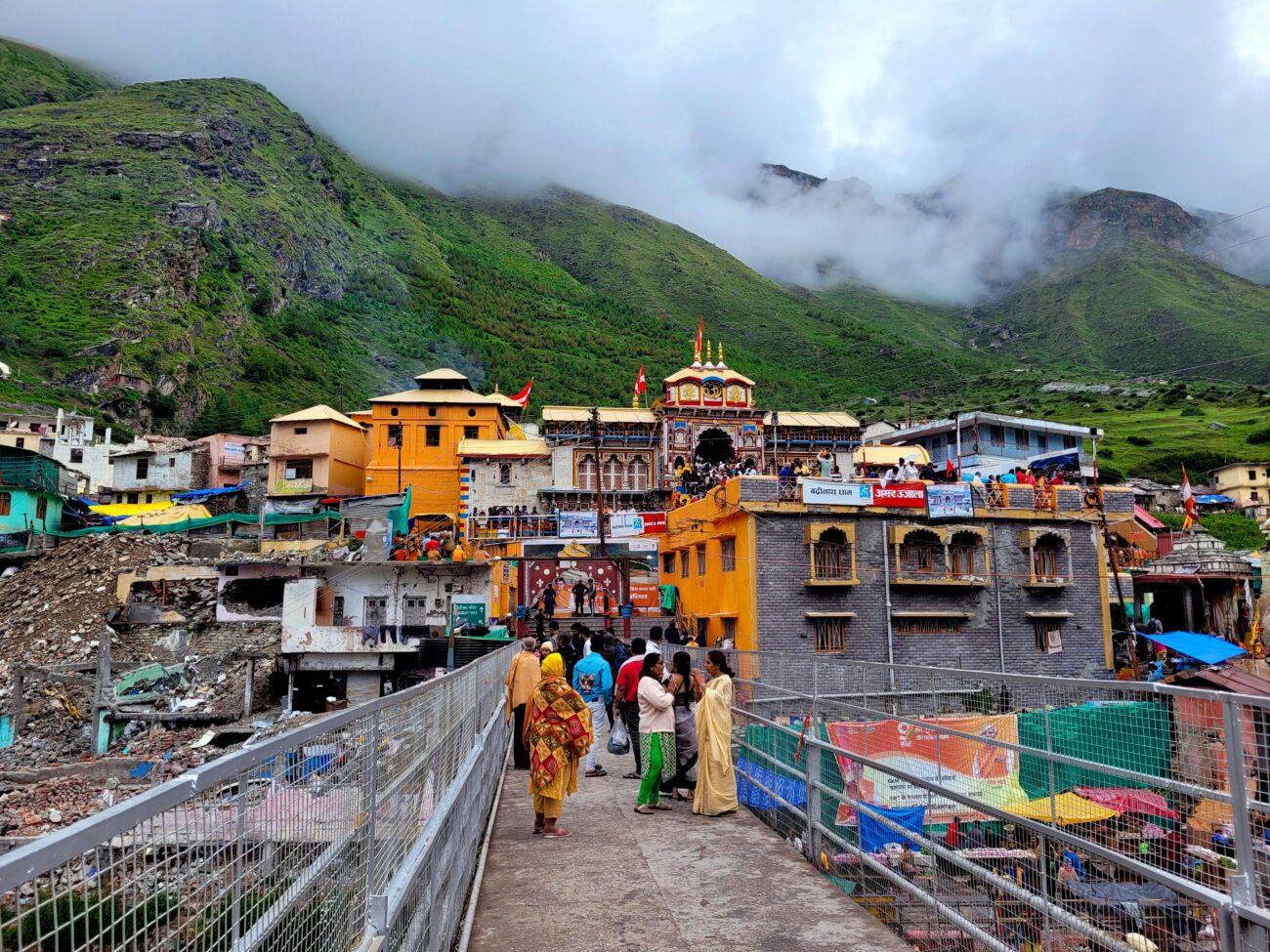
Cradled in the serene embrace of Uttarakhand’s Garhwal Himalayas, Badrinath shines as a sacred jewel, revered as one of the holiest pilgrimage sites in Hinduism’s Char Dham circuit. Nestled at 3,133 meters along the Alaknanda River, this ancient town is home to the iconic Badrinath Temple, dedicated to Lord Vishnu, drawing devotees and travelers seeking spiritual solace amidst snow-capped peaks. Surrounded by the majestic Nar and Narayan mountains, Badrinath’s tranquil ambiance, vibrant temple rituals, and proximity to natural wonders like Mana Village make it a spiritual and scenic marvel. As a key pilgrimage destination, akin to Haridwar and Rishikesh, it holds deep religious significance. For visitors to indiatourisminfo.com, Badrinath offers a divine journey, whether you’re offering prayers, exploring Himalayan trails, or marveling at the serene landscapes. This sacred Himalayan retreat, blending spirituality with natural splendor, is an unmissable destination in North India for those seeking a profound connection with the divine.
Key Attractions
Badrinath Temple: An ancient temple dedicated to Lord Vishnu, a Char Dham site with vibrant architecture and daily rituals.
Mana Village: India’s last village near the Indo-Tibet border, known for its Bhim Pul and Vyas Gufa.
Taptkeshwar Hot Springs: Natural sulfur springs near the temple, believed to have medicinal properties.
Neeti Valley: A scenic valley with lush meadows and Himalayan views, ideal for nature lovers.
Vasudhara Falls: A stunning 400-foot waterfall, 9 km from Badrinath, accessible via a trek.
Nar and Narayan Parvat: Majestic twin peaks surrounding Badrinath, adding to its spiritual aura.
Alaknanda River: A sacred river flowing through Badrinath, revered for its spiritual significance.
Things to Do
Visit Badrinath Temple: Offer prayers during morning or evening rituals, including the Nirmalya Darshan and Abhishek Puja.
Explore Mana Village: Visit Bhim Pul, Vyas Gufa, and meet locals crafting woolen goods in India’s last village.
Trek to Vasudhara Falls: Embark on a 9-km trek for breathtaking views and spiritual serenity.
Soak in Taptkeshwar Hot Springs: Relax in the warm, medicinal springs near the temple for rejuvenation.
Photography: Capture the temple’s colorful facade, snow-capped peaks, and Alaknanda’s serene flow, especially at sunrise.
Meditate by Alaknanda River: Find peace at riverside ghats, ideal for reflection and spiritual connection.
Visit Neeti Valley: Enjoy a day trip to this scenic valley for nature walks and Himalayan vistas.
Attend Festivals: Experience Diwali or Badri Kedar Utsav (October–November) for vibrant temple celebrations.
Local Culture and History
Badrinath’s spiritual legacy is rooted in Hindu mythology, where Lord Vishnu meditated under a Badri tree, giving the town its name. The Badrinath Temple, believed to be established by Adi Shankaracharya in the 8th century, is a cornerstone of the Char Dham pilgrimage, alongside Kedarnath, Gangotri, and Yamunotri. The town’s history is tied to ancient Vedic traditions, with Mana Village linked to the Mahabharata, where Vyas Rishi composed the epic. The local Garhwali and Bhotiya communities practice a vibrant culture, with traditional dances like Chancheri and warm hospitality. Cuisine includes simple vegetarian dishes like dal-chawal, kafuli (spinach curry), and phana (lentil soup), served at dhabas. Handicrafts, such as woolen shawls and prayer beads, are sold in local markets. Festivals like Diwali and the temple’s opening ceremony (May) draw crowds, with chants and rituals creating a divine ambiance, offering visitors a deep cultural immersion.
Best Time to Visit
Badrinath is accessible from May to November 2025, when the temple is open, and roads are clear. May to June (spring, 5–15°C) and September to November (autumn, 0–10°C) are ideal for pilgrimage, trekking, and sightseeing, with clear skies and mild weather, though May–June sees more pilgrims. July to August (monsoon) brings heavy rain, increasing landslide risks, so check road conditions; the temple remains open, but travel can be challenging. The temple closes from November to April due to heavy snow (-10°C to 0°C), making Badrinath inaccessible. Early mornings offer serene temple visits and clear Himalayan views, while evenings are perfect for riverside meditation. Plan around the temple’s opening (May 2025, exact date TBD) or Diwali for spiritual vibrancy, but book accommodations early during peak pilgrimage months (May–June, October).
How to Reach
By Air: The nearest airport is Jolly Grant Airport (Dehradun, 310 km away, ~8–10-hour drive), with flights from Delhi, Mumbai, and Bengaluru. Taxis from Dehradun cost ~₹8000–12,000. Alternatively, fly to Pantnagar (400 km, ~12–14 hours).
By Train: The nearest railway station is Rishikesh (295 km, ~8–10 hours) or Haridwar (320 km, ~9–11 hours), with connectivity to Delhi, Mumbai, and Kolkata. Taxis or buses from Haridwar/Rishikesh cost ~₹6000–10,000.
By Road: Badrinath is accessible via NH7 from Haridwar (320 km, 9–11 hours) or Rishikesh (295 km, 8–10 hours). HRTC buses, private taxis (~₹8000–12,000 from Haridwar), or shared cabs (~₹1000–2000/person) are available. The route via Joshimath is scenic but winding; check road conditions in monsoon.
Local Transport: In Badrinath, walk to the temple or hire taxis (~₹200–500) or auto-rickshaws (~₹50–200) for nearby sites like Mana Village.
Travel Tips
Booking: Reserve hotels or dharamshalas in advance during peak pilgrimage seasons (May–June, September–October); book via temple or tourism websites.
Cost: Temple entry is free; Vasudhara trek guides ~₹1000–2000; taxi tours ~₹2000–5000 (as of 2023; verify current rates).
Dress: Pack heavy woolens, windproof jackets, and sturdy shoes for high altitudes; modest clothing for temple visits.
Safety: Acclimatize in Joshimath or Rishikesh to avoid altitude sickness (3,133 meters); carry Diamox if advised; avoid trekking in monsoon due to landslides.
Permits: No permits are required for Indians; foreigners may need an Inner Line Permit for Mana Village (obtainable in Joshimath).
Connectivity: Mobile networks are unreliable; limited Wi-Fi in hotels; carry cash for small vendors and dhabas.
Environment: Avoid littering to preserve Badrinath’s sanctity; use designated bins; respect the Alaknanda’s purity.
Respect Local Culture: Dress modestly at the temple; seek permission before photographing rituals or sadhus.
Nearby Attractions
Kedarnath (220 km): Another Char Dham site with a historic Shiva temple, accessible via a trek or helicopter.
Joshimath (45 km): A pilgrimage town with Narasimha Temple and a gateway to Auli’s ski slopes.
Rishikesh (295 km): A spiritual hub with Ganga Aarti, yoga ashrams, and river rafting.
Haridwar (320 km): A holy city with Har Ki Pauri Ghat and evening Ganga Aarti.
Valley of Flowers (70 km from Joshimath): A UNESCO World Heritage Site with vibrant alpine flora, open June–September.
Explore More
Discover other Uttarakhand treasures like the spiritual Haridwar or the adventurous Rishikesh on our Uttarakhand destinations page. Plan your Himalayan pilgrimage with indiatourisminfo.com today!